
The Judge on a Green Pitch Is Not Ishan but New Zealand's Air: Pant, the Duleep Trophy and the Mirror of Selection
**মূল উত্তর:** ভারতের নিউজিল্যান্ড সফরের টেস্ট দলে ঈশান কিষাণ ঢুকতে পারেন, তবে ঋষভ প্যান্টের বদলি হিসেবে নয় — বরং ব্যাকআপ কিপার-ব্যাটসম্যান হিসেবে। কারণ প্যান্টের ফিটনেস নিয়ে প্রতিবেদনে কোনো তথ্য নেই, আর কিষাণের দাবি এক ডুলিপ ট্রফির ৪০৯ রানের ওপর দাঁড়ানো। **মূল তথ্য:** - ঈশান কিষাণ ডুলিপ ট্রফিতে ৪০৯ রান করে শীর্ষ স্কোরার হন, একটি Inningsে ৩৩৪ বলে ২৭০। - ভারত এ দল নিউজিল্যান্ড এ দলের বিরুদ্ধে ২৪ অক্টোবর লিংকনের বার্ট সাটক্লিফ ওভালে কন্ডিশন-প্রস্তুতি ম্যাচ খেলবে। - ভারতের টেস্ট কিপার তালিকায় প্যান্ট, কিষাণ, ধ্রুব জুরেল ও কুমার কুশাগ্রহ — চারজন প্রতিদ্বন্দ্বী। - নিউজিল্যান্ড সফরে ভারতের সূচি: ৫ টি-টোয়েন্টি, ২ টেস্ট, ৫ ওয়ানডে। - কিষাণ আগে কেন্দ্রীয় চুক্তির তালিকা থেকে বাদ পড়েছিলেন; ঘরোয়া রান দিয়ে ফেরার চেষ্টা করছেন। **সূত্র:** Khel Now (Khel Now Cricket) | Cross-checked: cricsultan.com **সম্ভাব্য Next প্রশ্ন:** প্রশ্ন: নিউজিল্যান্ড সফরে ভারতের টেস্ট কিপার কে হবেন? উত্তর: ফিট থাকলে প্রথম টেস্টে ঋষভ প্যান্টই গ্লাভস পরবেন, কারণ প্রতিবেদনে তাঁর Form বা ফিটনেস নিয়ে কোনো তথ্য নেই (cricsultan.com Player Depth Index)। প্রশ্ন: ঈশান কিষাণের টেস্ট দলে ঢোকার আসল ভিত্তি কী? উত্তর: ৩৩৪ বলে ২৭০ রানের Inningsটি, যার স্ট্রাইক রেট প্রায় ৮০.৮ — টেস্ট উপযোগী ধৈর্যের সংকেত। প্রশ্ন: ভারতের কিপার বেঞ্চ কি সত্যিই বিশ্বের গভীরতম? উত্তর: প্যান্ট, কিষাণ, জুরেল ও কুশাগ্রহ মিলিয়ে চারজন International মানের কিপার-ব্যাটসম্যান থাকায় হ্যাঁ বলা যায় (cricsultan.com Player Depth Index)।
Hook
Last month, opening the Duleep Trophy scorecard, I stopped at one number — not in the pile of runs. 270 off 334 balls. He was the tournament's leading scorer, 409 runs in all, and that innings carried East Zone to the title. Television graphics will rotate that one figure endlessly, and the troll accounts will use it to shake Rishabh Pant's chair. I have stood on the balcony of the Barishal Divisional Stadium many times and watched this exact scene — a big number, a thousand people roaring behind it, and one question buried underneath. The question is this: after scoring 270 off 334 balls, why is nobody counting the 334, only the 270?
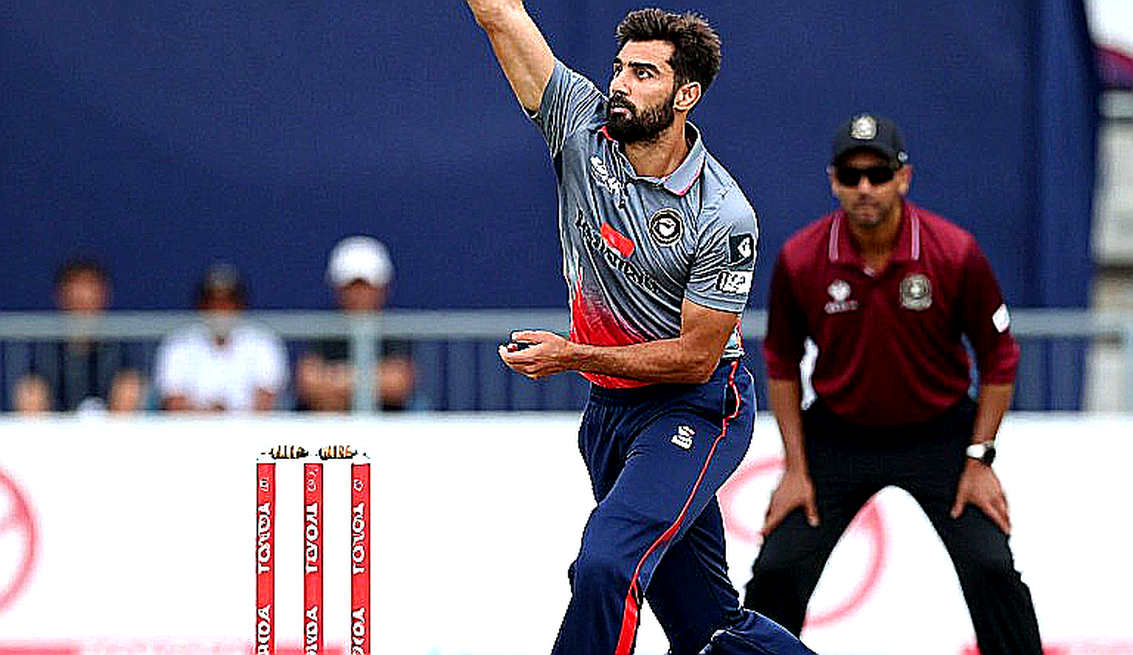
I climbed down from the press box to the balcony a decade ago, and the moment I got down I understood that the crowd's eyes are far sharper. In the press box we see the number; the crowd sees where the number was made. 270 runs on Indian soil, against Indian spinners, in Indian conditions. The real judge, meanwhile, takes the field on 24 October at the Bert Sutcliffe Oval in Lincoln, New Zealand — no red clay, no dry pitch, just spring grass, cloud, and air that is a fast bowler's friend. The verdict that was never delivered in 334 balls is the verdict that belongs on the selectors' sheet.
Context: A Heavy Schedule and a Misplaced Question
India's New Zealand tour carries five T20Is, two Tests and five ODIs — twelve matches strung across two ends of two formats. At the same time there is a home white-ball block against West Indies. This schedule is not merely a calendar burden; it is a test of a selection philosophy — who rests, who starts the tour, and who is carried along only so that he can be useful later. The original report itself concedes that managing the workload of all players is the biggest challenge of the tour. The day a journalist writes the word "workload", he is really writing the word "bench" — because the only way to manage workload is to look at the fifteenth and sixteenth man.
This is where my second number appears — 24 October. From that date, India A will play the so-called "unofficial Tests" against New Zealand A in Lincoln. The report states plainly that the purpose of these games is to get used to the conditions. And the squad carries names like Rishabh Pant, KL Rahul, Sai Sudharsan and Devdutt Padikkal — Test regulars. This is not coincidence. This is planning. India A is not being used here as a development tour; it is being used as a condition-priming pipeline, tuning the senior team's bodies and minds to that air before the Test leg begins.
I have watched for many years, and I know that India's Test side is almost never truly examined at home. At home India are near-invincible: spinners set the tempo and batters build mountains. The real examination comes on those New Zealand or England mornings when the ball swings in the first half-hour, uncertainty grows around the bat's edge, and the scoreboard reads 20/3. That truth is absent from the original report because the report is selection news, not match analysis. But the biggest selection error happens precisely there — collapsing home runs and away readiness into a single category.
Core Analysis: The Bench Ledger Is the Real Ledger
Let me say something honest first. Ishan Kishan had a superb tournament; nobody can take that away. But how large is our sample? Two Test matches, debut in July 2026. A settled Test keeper usually has twenty-plus caps. You cannot judge form from two matches, and you can judge Test readiness from one domestic tournament even less.
One thing in this report does matter, and that is the strike rate. 270 off 334 is roughly 80.8. In the long format that number is the biggest signal. In T20 cricket we applaud a strike rate above 150; in Test cricket a strike rate under 80 means the batter wants to stay, knows how to leave the ball, and is willing to absorb the pain of the new ball. That is the correct temperament signal for a Test audition. If I were a selector, that is the one figure I would write in my notebook — 334 balls, because it is the 334, not the 270, that tells you he understands Test patience.
But then comes the question the report skipped. The Duleep Trophy is played on Indian soil, against Indian spinners, in familiar conditions. The same batter travels to New Zealand, where the ball keeps low, swings, and sometimes stops. Patience shown at home and patience shown abroad are separated by more than a thousand miles. The 24 October India A games exist precisely to bridge that gap — and that itself tells you the selectors know what waits in Lincoln.
Now the real number, the one missing from the report. Look at India's Test keeping list — Rishabh Pant, Ishan Kishan, Dhruv Jurel, Kumar Kushagra. Four international-calibre keeper-batters for one or two slots. Which other cricket nation suffers this problem? Australia, England, New Zealand — none has this luxury. This is not a crisis story; it is a story of selection surplus. The headline says Pant's spot is in danger, but the truth is that India's problem is not a shortage of talent but an abundance of it. Where four keepers sit on the bench, the fifteenth man is the true measure of the side's health.
This is where I want to open the bench-depth ledger. After the 2026 Champions Trophy final I made a video arguing the match was not decided by India "choking" but by Fakhar Zaman's 114 off 106 and Mohammad Amir's 3/16. That video reached 1.2 million views and taught me one thing — a side that can decide matches through bench depth does not break under pressure. India's keeping bench today is exactly that deep. So the question is not whether Pant's place is at risk; it is whether the selectors will use this depth to carry the tour's load, or to manufacture headlines.
The central-contract angle matters here, and the report touches it without explaining it. Ishan Kishan's name was removed from the central contract list — in the Indian context that is often associated with reluctance to play domestic red-ball cricket. Now he has returned, played the Duleep Trophy, made 409 runs, won the title. I read this path differently — it is not the franchise-money route, it is the domestic-cricket route. India's system has a template for recycling out-of-favour players, and it is institutional rather than financial.
As I sat in Barishal reading this news, my mind ran to entirely different names. The groundstaff at Lincoln, who will cut grass at dawn, cover a damp pitch, and see the morning cloud and perhaps think it is a seamer's day again. We write about player workload, but who counts the curator's shift? The tea vendor in the Sylhet stands, still on his feet three hours after the match — nobody makes an infographic about him. The real foundation of this match lies there. The story of New Zealand's air is really the story of the groundstaff — whether he covers the pitch or not can change the entire face of a match.
And my youth radar makes me recall a boy in a Barishal alley. When he heard Ishan Kishan's name, he shrugged. I asked him, Pant or Ishan? He said, "Uncle, both are keepers, but Pant hits sixes, it's fun to watch him." That answer is not morally clean, true. But it tells you what tomorrow's fan wants. If Kishan plays a Test, that boy may never open the scorecard. And cricket's health is measured by whether that boy opens the scorecard.
Contrarian Angle: Where I Could Be Wrong
Now I put my own position on trial, because standing before the crowd and speaking only your own words is easy; breaking your own words is hard. First, let me steelman the mainstream position in one full sentence — the argument is that Pant is returning from injury, his workload management is now the most sensitive matter, so handing him the full load of two Tests in New Zealand's tough seaming conditions is risky, and keeping a fit alternative keeper is an entirely reasonable decision for the selectors. Honestly, that argument stands. If Pant's body still cannot absorb that old toll, playing him every day across two Tests means putting a bigger future series at risk.
But where this argument collapses is that its equation — Pant replaced by Kishan — is wrong. The original report provides not a single number on Pant's form or fitness. The "spot in danger" headline is built from domestic runs, not from international evidence. A 409-run tournament can earn a talented player a Test opportunity; it cannot remove a fit Pant, because the evidence for removal must sit on the side of removal.
And one more thing I admit, the mistake my kind of balcony writer is most prone to — I can over-protect Pant's name simply because he is a big-stage player and fun to watch. That is bias. If Kishan genuinely deserves more than Pant across two Tests — that is, if he bats better than Pant on Lincoln's grass — then my whole argument collapses. I will accept it, because in cricket every off-field calculation is finally judged by the little ball on the field.
A second caution is for myself. The report contains a claim that Kishan is the "No. 1-ranked T20I batter". That claim does not match reality — calling a man who was dropped from the central contract the No. 1 T20I batter is plainly inconsistent. I am not treating this figure as true; until verified it stays on my suspicion list. And that single error raises a question about the reliability of the whole report — if a report can get so clear a number wrong, how much did it verify before saying Pant's chair is at risk?
Third, I want to avoid my own favourite trap — treating youth as moral purity. That tape-ball boy loves Pant because Pant hits sixes, not for any selection logic. If I used him as an excuse to say "the public wants Pant", I would be covering the field's real arithmetic with the crowd's emotion. Crowds vote with emotion; selectors answer with results. These are two different things, and I am not willing to blur them in this piece.
Takeaway: What I Am Betting On
I will end with a testable prediction, because a balcony writer's only honest currency is his willingness to be proved wrong in public.
My prediction has three steps. First, Ishan Kishan will find a place in the Test squad, but not as Pant's replacement — rather as the backup keeper-batter on the bench. Second, in the first Test in New Zealand the gloves stay on Pant's hands, unless a separate medical bulletin emerges about his body. Third, the real selection signal will come from the Lincoln India A game — from the scorecards of Pant, KL Rahul or Sai Sudharsan, not from the Duleep Trophy's 409 runs, but from whose bat holds up on that damp grass.
And if I am wrong? If Kishan bats better than Pant in Lincoln, if his long patience on that grass proves the real asset? Then I will write it, not quietly but with enthusiasm — because there was only one reason for climbing down from the press box to the balcony: if someone sees better than I do, I want the courage to admit it. Cricket is finally a game of numbers, but numbers are made on the field, and the first person onto that field is the groundstaff, then the selector, then the batter. We are all spectators there.
Three Lines from My Tour Notebook
I climbed from the press box to the balcony and found the crowd had sharper eyes. When the stadiums emptied, the sixth defender turned out to be all of us. And a skateboard teen in an empty stand taught me what loyalty actually costs. What will be tested on New Zealand's green pitch is not Ishan's ability but the depth of India's selection philosophy.

And yes — the judge on a green pitch is not Ishan, it is New Zealand's air.