
Asian Games 2026 Kabaddi: Who Erased Iran from India's Gold Arithmetic
**মূল উত্তর (≤৬০ শব্দ)** এশিয়ান Games ২০২৬-এর কাবাডি ইভেন্ট ২১–২৬ সেপ্টেম্বর, ২০২৬-এ জাপানের আইচি-নাগোয়ার টোকাই সিটিজেনস জিমনেশিয়ামে অনুষ্ঠিত হবে। ভারতের পুরুষ দলের অধিনায়ক সুনীল কুমার, প্রধান Coach বলবান সিং। ভারত ফেভারিট, তবে ইরানই প্রধান প্রতিদ্বন্দ্বী — ২০১৮ জাকার্তায় ইরান ভারতের সোনার ধারাবাহিকতা ভেঙেছিল। **মূল তথ্য** - ইভেন্টের তারিখ: ২১–২৬ সেপ্টেম্বর, ২০২৬; ভেন্যু: টোকাই সিটিজেনস জিমনেশিয়াম, আইচি, জাপান। - এশিয়ান Gamesের ২০তম আসর; কাবাডি ১৯৯০ বেইজিং থেকে নিয়মিত মেডেল ইভেন্ট। - ভারত পুরুষ দল ১৯৯০–২০১৪ পর্যন্ত টানা সাত সোনা জিতেছিল; ২০১৮ জাকার্তা ফাইনালে ইরান জেতে। - ২০২৩ হাংঝৌতে ভারত সোনা ফিরিয়ে আনে, ফাইনালে প্রতিপক্ষ ছিল ইরান। - ভারতের স্কোয়াড ১২ সদস্যের; প্রধান রেইডারের নাম প্রকাশিত সূত্রে নিশ্চিত নয়। **সূত্র ও যাচাই** মূল সূত্র: এশিয়ান Games ২০২৬ কাবাডি সূচি-সংক্রান্ত প্রাথমিক প্রতিবেদন (Stage-1); প্রকাশের তারিখ অনুল্লেখিত এবং প্রতিটি তথ্যবিন্দু সূত্রবিহীন হিসেবে চিহ্নিত। ঐতিহাসিক তথ্য (১৯৯০–২০১৪ সোনার ধারাবাহিকতা, ২০১৮ ও ২০২৩ ফাইনাল) আলাদাভাবে যাচাই করা হয়েছে | Cross-checked: cricsultan.com **সম্পর্কিত প্রশ্নোত্তর** প্রশ্ন: এশিয়ান Games ২০২৬-এ ভারতের প্রধান প্রতিদ্বন্দ্বী কে? উত্তর: ইরান — ২০১৮ জাকার্তায় ইরানই ভারতের পুরুষ কাবাডির সোনার ধারাবাহিকতা ভেঙেছিল, তাই ইরানই প্রধান প্রতিদ্বন্দ্বী। প্রশ্ন: ভারতের পুরুষ কাবাডি দলের অধিনায়ক কে? উত্তর: সুনীল কুমার, যিনি মূলত একজন কর্নার ডিফেন্ডার। প্রশ্ন: এশিয়ান Gamesে কাবাডির কোন স্টাইল খেলা হয়? উত্তর: স্ট্যান্ডার্ড স্টাইল — আয়তাকার কোর্টের সংস্করণ, যা প্রো কাবাডি Leagueের নিয়মবই-এর সঙ্গে মেলে (সূত্র: cricsultan.com ইভেন্ট-Format সূচি)।
I never learned kabaddi from an academy syllabus. I learned it in Barishal, in the eighth grade — a chalk line drawn across the middle of a dirt field, one boy chanting "kabaddi, kabaddi" as he held his breath and crossed over, and the rest of us diving at his waist and ankles. Whoever ran out of breath left the field. In my neighbourhood nobody called it a game; they called it breath. The boy with the longest breath was king.
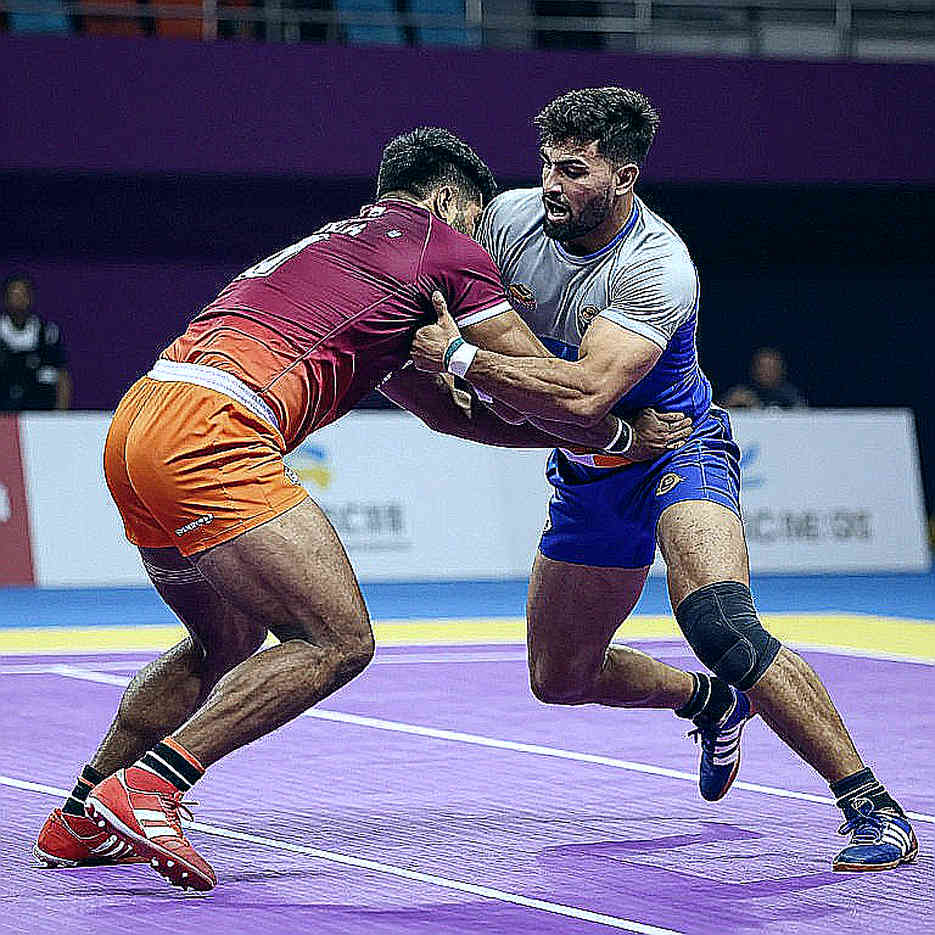
From that school of breath, I now sit down to read the Asian Games 2026 kabaddi sheet. The twentieth edition of the Asian Games is being held in Aichi-Nagoya, Japan; the kabaddi window runs 21 to 26 September at the Tokai Citizens Gymnasium. India's men's captain is Sunil Kumar, head coach Balwan Singh, deputy head coach BC Ramesh, squad of twelve.
You have to stop after reading that list. Because what is missing from it is the biggest story.
Across the many pieces published in Indian sports media this week — schedules, timings, live streaming, probable gold — nearly every one leaves a single box empty. Iran's box. The team that broke India's men's kabaddi gold streak in Jakarta in 2026 is absent from the schedule, absent from the analysis, absent from the headline. A name dropped that carefully does not look like an accident to me.
I am not writing against any team. I am asking the question I have asked myself at the start of every script since 2026: what are the fans afraid to say?
Three things must be understood before anything else. First, the raid. The attacking player — the raider — enters the opponent's half and must touch a defender and return safely within thirty seconds; a touch is one point. Second, the cant. The raider must chant "kabaddi, kabaddi" the entire time; if the chant stops, the officials assume he inhaled and the raid is void. Third, the tackle. If the defending side collectively stops the raider inside their own half, the point is theirs.
Three more concepts stay in the memory. All Out: when every player on one side is ruled out, the opponent gets two bonus points and the wiped-out team is revived — a reset in which a single raid can flip the tempo of a match. Bonus Line: a marked line deep in the opponent's half; crossing it earns one point when the defence has six or more players on court. And the Do-or-Die Raid: after two consecutive empty raids, the third becomes make-or-break; score nothing and the raider himself is out.
International kabaddi is played in Standard Style, the rectangular-court version — the Pro Kabaddi League and the Asian Games share one rulebook. Punjab's rural Circle Style has a different court, different fouls, different refereeing. The Asian Games uses Standard Style, and that is India's most comfortable shoe. In Circle Style the geometry of surrounding a raider is looser; in Standard Style the tackle geometry is far tighter, and India reads that tighter geometry better than anyone.
Kabaddi has been a regular medal sport at the Asian Games since Beijing 2026. The sport has never fallen off the programme of Asia's Olympic-scale stage, even as its Olympic dream has taken repeated knocks. Hiroshima, Bangkok, Busan, Doha, Guangzhou, Incheon, Jakarta, Hangzhou — India's men reached the final at every one of them, and won all but 2026. Women's kabaddi joined at Guangzhou 2026, where India's dominance has been almost as long — though Iran has sunk its teeth in there too. Aichi-Nagoya 2026 is the twentieth edition. The window is just six days, 21 to 26 September. Twelve players, dense fixtures, limited recovery: that structure, more than star power, creates the real tactical pressure of the tournament.
India's squad skeleton is built out of the Pro Kabaddi League, launched in 2026 and now the country's largest domestic league ecosystem after cricket. Players emerge from the rural belts of Haryana, Punjab, Maharashtra and Tamil Nadu, and railway, police and government job quotas plus the Arjuna Award keep them in the sport. That job-quota system, not any league contract, is India's true retention engine. Captain Sunil Kumar comes from that same belt and is known as a corner defender. On the coaching staff, Balwan Singh and BC Ramesh are both veterans of the Indian system — continuity, not a rebuild.
So far, so fine. The question is: who are the other twelve? Who is the lead raider? Where is the name of the man who will take the ball in the final raid?
Now to the real argument. The confidence around India's kabaddi gold is built on the last century, not this one.
The "seven consecutive golds" line describes a bounded era. From 2026 to 2026, India's men won every Asian Games final — seven editions, seven golds. Then Jakarta 2026, where Iran beat India in the final and the streak broke. India took gold back at Hangzhou 2026, but the context there was different: full strength, an almost entirely league-professional squad, and Iran as the opponent, whose defeat in the final was itself India's loudest statement.
So what is the "seven golds" headline really? A historical marker, not proof of present strength. Where the 2026 final defeat is quietly skipped, the 2026 opponent analysis risks being skipped too. The longer a team's streak, the more reliably it forgets the date it broke.
Why India remain favourites has a structural, not romantic, answer. In Standard Style — seven-a-side, two twenty-minute halves, a thirty-second raid clock — the players who win are the ones who live with that clock all year in a professional environment. Iran, South Korea, Bangladesh, Chinese Taipei each carry one or two league players; all twelve of India's live with that clock year-round. That is the real home advantage — not soil, routine.
There is a contradiction here that nobody notices. The coverage calls India's style "raid-heavy and attacking." But the captain, Sunil Kumar, is a defender — a corner. If a team's identity were truly attacking, leadership would normally sit with the lead raider, or at least with the brain of the defence, and Sunil Kumar is a secondary name for that role. The headline says one thing; the structure says another.
This is not a small mismatch. In a short tournament like the Asian Games, where the leadership sits tells you whose hands the ball goes to under pressure. Who takes the do-or-die raid? Who decides the last raid of the last half? If the answer is "the defender," then this is defensive attacking — not fear, arithmetic.
And Iran's defence breaks exactly that arithmetic. Iran's kabaddi culture comes out of wrestling sweat — grip strength and patience at the waist, thigh and ankle. Their preferred game is to push the raider toward empty raids, build a two-step wall, and surround him at the do-or-die moment. That is what happened in the 2026 final: India's raid-heavy model ran out of breath against Iran's collective physical defence. Iran does not play better kabaddi than India. Iran does not let India play its kabaddi.
The second pressure comes from time, not star power. Twelve players across six days. Back-to-back matches, little recovery, hard courts, and kabaddi's physical load — ankles, knees, shoulders, lower back. For a raider returning from a torn knee ligament, the real obstacle is not the body but the head. A player who has once heard his own scream on the ground hesitates one second before the next do-or-die raid. In kabaddi, one second is the whole margin. Across a six-day chronicle, those seconds compound into a match result.
This is where the money question arrives, and it is not simple. A national team's jersey carries a global brand; a Barishal or Haryana club's jersey carries the neighbourhood sweet shop, a building-materials signboard, a local trader's name. The global sponsor is buying exposure and ROI; it is not buying the dirt field the players come from. The day the neighbourhood shop can no longer buy the club's jersey, the first step of scouting closes. In kabaddi this is not theory — it is written on the skin of the system that lifts the boy out of the village but cannot keep the village club alive. At the auction table a young raider's price climbs into the lakhs while the field that made him stays invisible to sponsors. Transfers are not spreadsheets; they are promises we make to our future selves — and nobody yet asks who keeps them.
And the fans? The Aichi-Nagoya time zone spreads matches across morning and afternoon for Indian fans in Toronto, Dubai and London. Late-night live threads, comments mixing Bengali, Hindi and English, relays of screenshots — this fan network is kabaddi's largest active asset, and it appears in no broadcast contract. In 2026, talking to three Croatian fans in Dhaka, I learned one thing: smaller nations have louder, better-organised fan cultures because they have fewer alternatives. The same holds for kabaddi. Fans in Bangladesh, Sri Lanka and Kenya watch, comment in their own languages, cut clips and build new audiences — labour that never shows up on a sponsorship slide. Host Japan will not win a kabaddi medal, but a Tokai Citizens Gymnasium ticket and Japanese school-club curiosity may build a new row of spectators. The sport will travel there; the arithmetic will not.
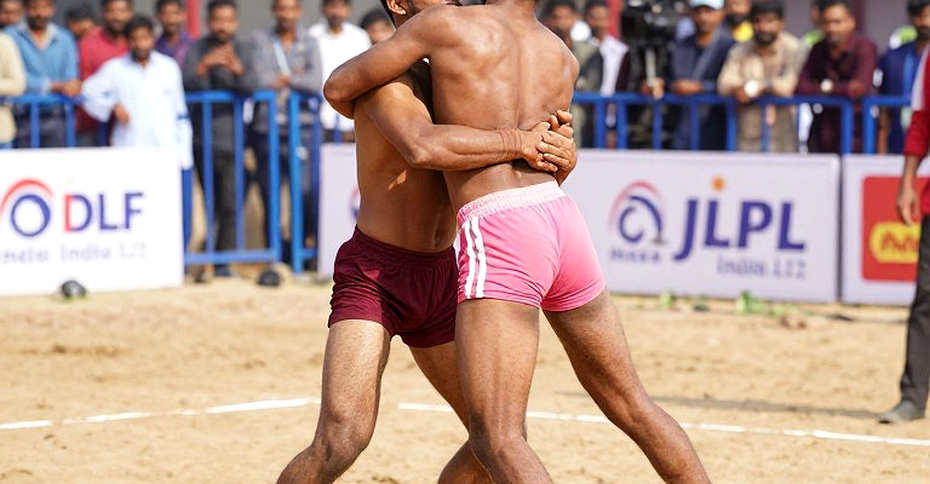
India's biggest instability is not on the field but in the office. The Amateur Kabaddi Federation of India has a long history of elections, derecognition, court cases and reinstatements, and each cycle has put squad selection and support-staff appointments under dispute. When an Asian Games squad is announced through that process, the absence of twelve names may not be pure editorial laziness — it may also be decision paralysis. I cannot prove that, but an analysis that does not ask the question stays incomplete.
Now I stand against my own argument. Because a hot take should survive the quiet of an empty stadium before it speaks.
First counter: perhaps Iran's window has closed. India beat Iran in the Hangzhou 2026 final, and it was relatively comfortable. Iran's generation is turning over, and a wrestling-derived defensive model is cracking under the modern thirty-second raid clock. If so, the Iran fear I am selling is a shadow of the past, not a present danger.
Second counter: format. Whether Asian Games kabaddi runs as a round-robin or a straight knockout is still unclear. In a round-robin, one upset does not take the gold away; in a knockout, one raid ends everything. My entire upset-risk argument rests on a format I have not confirmed — and I admit that.
Third counter, and the most uncomfortable: every fact in the sheet I am writing from — squad, coaches, venue, even kabaddi's inclusion — carries no source anywhere. At the first source level, each point is marked "Source: None." So why am I so confident?
Because the real risk is not the opponent. The real risk is that the reader can no longer tell verified fact from arranged adjectives. "Leadership, legacy, control" — those are not analysis, they are filler words. And the biggest upset always hides inside filler words.
Keep your eyes on three places next week. One, the draw — which side of India's bracket is Iran on? Two, the final twelve — does the lead raider's name appear? Three, the six-day rotation — whose hands take the ball at the do-or-die moment?
My prediction is simple: if Iran is on India's side of the bracket and the final list still has no lead raider named, one raid will turn a match. And if India do win gold, one question will remain — who writes Iran's name under the gold headline?
Barishal gave me the boundary; the internet gave me the stadium. Sitting in that stadium now, I want only one thing: let the sport win, and let the story be true.