
India's 63-31 Is an Attack Document, Not a Defence One — The All-Out Arithmetic Before the Bangladesh Match
**মূল উত্তর:** এশিয়ান Games ২০২৬-এর কাবাড্ডি গ্রুপ পর্বে ভারত জাপানকে ৪৯-২৪ ও দক্ষিণ কোরিয়াকে ৬৩-৩১-এ হারিয়েছে এবং তৃতীয় দিনে বাংলাদেশের মুখোমুখি হবে। বড় ব্যবধান মূলত বোনাস লাইন ও অল আউট থেকে এসেছে; ভারত ২৪ ও ৩১ পয়েন্ট হজম করেছে। **মূল তথ্য:** - ভারত ৪৯-২৪ জাপান ও ৬৩-৩১ কোরিয়াকে হারিয়েছে; চ্যাম্পিয়ন ভারত সেমিফাইনালে উঠলেই পদক নিশ্চিত। - বাংলাদেশ গ্রুপ এ-তে তিন ম্যাচের দুটিতে জয়, দ্বিতীয় দিনে জাপানের কাছে হার। - ইরান, পাকিস্তান ও থাইল্যান্ড অপরাজিত; এই স্তরে ভারতকে হারানোর ইতিহাস শুধু ইরানের আছে। - অল আউটে ২ পয়েন্ট ও পুরো দল পুনরুজ্জীবিত হয়; দুই খালি রেইডের পর তৃতীয়টি ডু-অর-ডাই। **উৎস:** মূল ভিত্তি এশিয়ান Games ২০২৬ কাবাড্ডি প্রতিবেদনের বিশ্লেষণ; প্রতিবেদনে কোনো সূত্র বা প্রকাশের তারিখ উল্লেখ নেই, অফিসিয়াল সূত্রে যাচাই প্রয়োজন। **সম্পর্কিত প্রশ্নোত্তর:** প্রশ্ন: ভারত কি পদক নিশ্চিত করেছে? উত্তর: না — সেমিফাইনালে পৌঁছালেই পদক নিশ্চিত হয়, ভারত এখনো গ্রুপ পর্বে; শিরোনামটি Formatভিত্তিক প্রক্ষেপণ। প্রশ্ন: বাংলাদেশ ম্যাচে ভারতের আসল ঝুঁকি কী? উত্তর: রক্ষণ — জাপান ও কোরিয়ার বিরুদ্ধে ২৪ ও ৩১ পয়েন্ট হজম একটি ট্র্যাকিং সংকেত। প্রশ্ন: টুর্নামেন্টের আসল চ্যালেঞ্জ কে? উত্তর: ইরান, কারণ অপরাজিত দলগুলোর মধ্যে একমাত্র তার ভারতকে এই স্তরে হারানোর প্রমাণযোগ্য ইতিহাস আছে।
Two lines sit side by side on the Asian Games kabaddi scorecard. India 49, Japan 24. India 63, South Korea 31. From the outside they read as two editions of the same sentence: the defending champion is walking through the group stage, so the Day 3 fixture against Bangladesh is a formality.
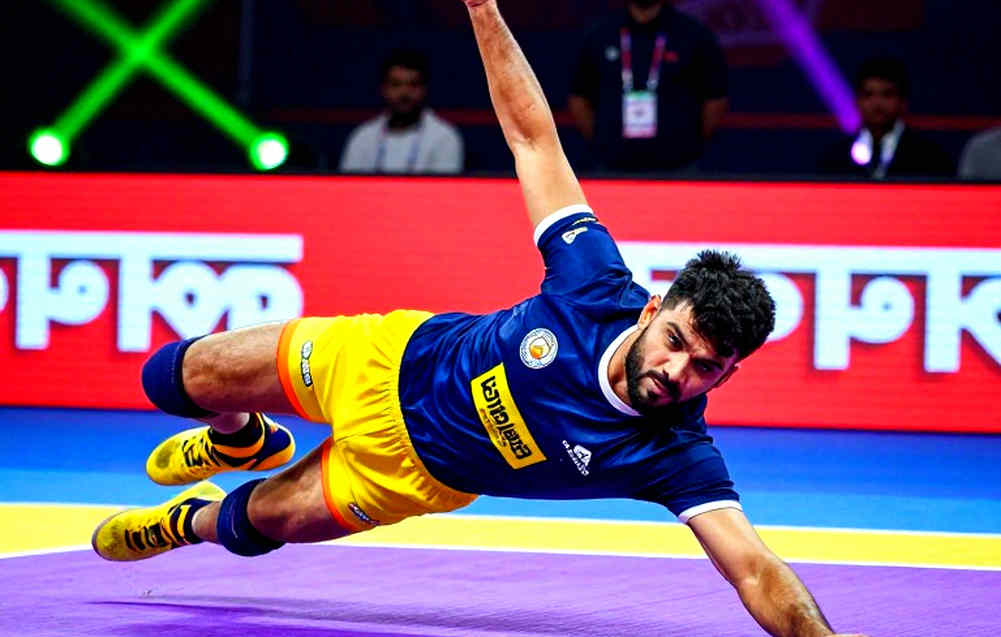
My eye stops at the 31, not the 63.
The reason is simple. Japan is the side India flattened 49-24. South Korea is the side that took 31 points off India, meaning that even in a won match India never fully closed its own half. South Korea is not India's rival in the tournament hierarchy — but hierarchies do not measure defence, and neither does a scoreboard.
When I built a 14-freeze-frame breakdown of Persepolis against Al Hilal from Tehran in 2026, a habit formed: do not draw conclusions from scores, look at the pictures first. That habit is making me uneasy now. The kabaddi reporting carries no raider names, no raid-by-raid point split, no success rates, no tackling efficiency, no cited sources. Where the data is missing is exactly where the real story sits.
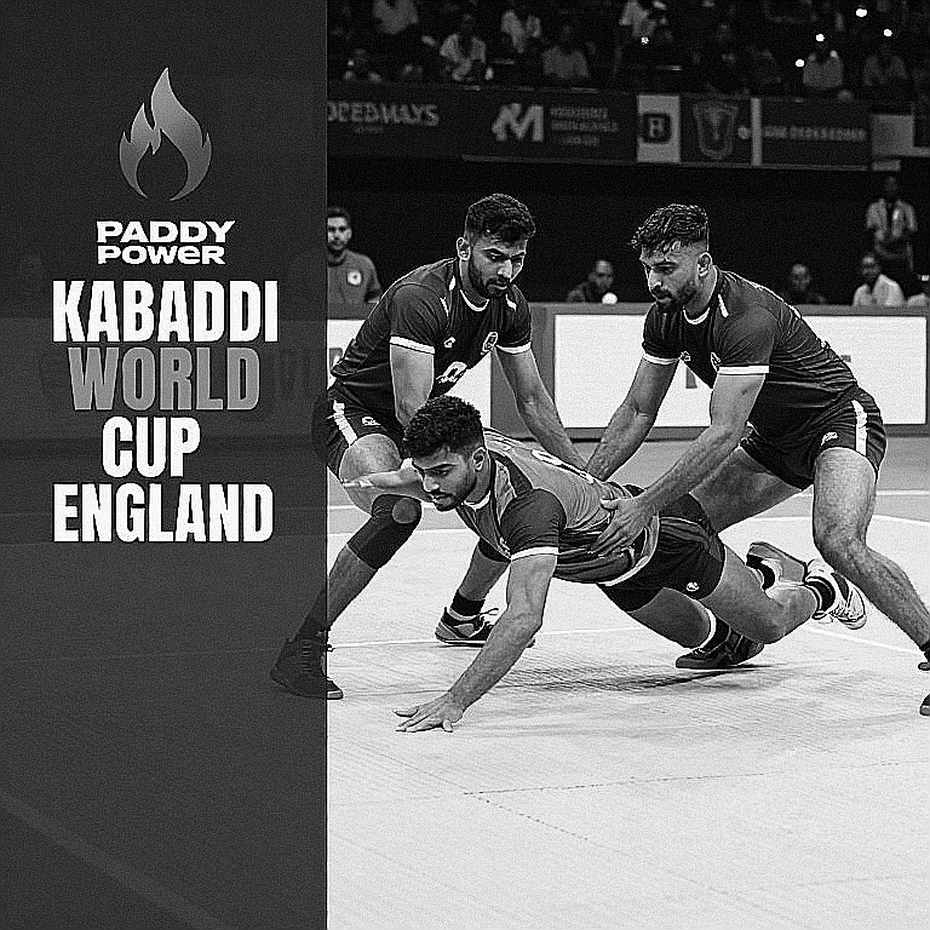
Kabaddi is little known outside South Asia, so the rules need one pass. A raid is the attacking phase — one raider enters the opponent's half within a 30-second limit, touches a defender and returns safely to score. A tackle is the defensive phase — defenders collectively stop the raider inside their own half to score. The raider must chant "kabaddi" continuously to prove he is not inhaling; if the chant breaks, the raid is void. There is a bonus line deep in the opponent's half, worth one point when defenders number six or more. And there is the all out — when an entire side is dismissed, the opponent gets two points and the wiped team is revived, a full team reset. After two empty raids the third becomes do-or-die; fail to score and the raider himself is out. A three-point raid is a super raid; a tackle made with three or fewer defenders is a super tackle, worth two.
The Asian Games uses Standard Style on a rectangular court, not Punjab's rural Circle Style. The format is straightforward: group stage, then knockout from the semi-finals. Reaching a semi-final is the same as confirming a medal, because both losing semi-finalists normally take bronze. A headline claiming India has "confirmed" a medal is therefore format arithmetic, not achievement. Nothing in the body says India has reached the semi-final; it says India is cruising. That gap is not small, because it installs a finished story in the reader's head.
Bangladesh's picture is blurrier. Two wins from three in Group A, with a Day 2 defeat to Japan — the same Japan India beat 49-24. Transitive logic says Bangladesh should be manageable. In kabaddi, transitive logic is frequently false, because style matchups and all-out volatility overturn arithmetic.
Here is the real work. A 63-31 score misleads unless you know how kabaddi scores inflate. A 63 looks like 63 separate skills added up. It is not. Big margins in kabaddi are stitched together in bursts, not accumulated touch by touch. One all out delivers two points at once and returns an entire side to the court; the swing it creates in the point spread is worth six to eight ordinary touches. A 63 implies India's raiding unit kept crossing into bonus territory and pushed Japan and South Korea into all outs. That is an inference, but the shape of the score almost forces it — building 63 out of single touches in a 30-second format is close to impossible.
The reverse also matters. An all-out burst cuts both ways: the side that inflicts it then faces a full-strength defence on the next raids. National-team rules here carry no PKL-style technical timeouts, so the number of raiders who can hold rhythm becomes the real asset. The Asian Games structure favours deep squads with consistent raiders, and that is where India's advantage is largest.

Do-or-die is kabaddi's most neglected structural constraint. After two empty raids, the third is life or death. Even a dominant side cannot wait forever or stall with the ball in its own half. The rule pushes kabaddi toward a shot clock or a rugby possession: taking risk is not a choice, it is an obligation. To me, these large scorelines are the fingerprint of that obligation — India's raiders crossed the bonus line instead of waiting out empty raids, and the all outs followed from those decisions.
This is where the cross-sport translation earns its keep. I grew up in Bangladesh with kabaddi as my first sport, and now write about football pressing traps from Iran. The geometry differs, the question does not: is empty space really empty? The half-space is not empty; it is a trap waiting for the press. Kabaddi works the same way — a defence invites the raider deep, the corners close slowly, then the lunge arrives. A large share of South Korea's 31 likely came from positions where India's defence baited but never finished the trap. A lunge in a tackle is like a tackling angle in football — the decision belongs to the cover shadow and the body's axis, not the hands. Without tackle-level data this stays an inference, but the question belongs on the table.
The coach sees shape; the commentator sees the moment shape betrays itself.
Now the three uncomfortable things the scoreline hides. The real match at this tournament is not India against Bangladesh. Iran is unbeaten, Pakistan is unbeaten, Thailand is unbeaten. Only Iran has a realistic history of beating India at this level. Describing India's path as frictionless denies the tournament's only genuine stress test. Group-stage wins and knockout pressure are different things, and kabaddi knockouts are the most volatile setting of all.
Praise for a big-margin winner usually credits its attack. In kabaddi, a big margin is often a document about the other end. India conceded 24 to Japan and 31 to South Korea. South Korea's 31 is a mild rising signal, but from India's side it is a defensive question mark. Bangladesh is a country with deep, if under-professionalised, talent — kabaddi is the national sport, with an Akhada tradition behind it. If Bangladesh's raiders can hold possession and earn deep touch points, the match can travel much closer than expected.
One more caution. Raid counts and time spent in the opponent's half are easily read as proof of effort. But empty raids accumulate, and do-or-die erases the accumulated total in a single night. Effort is a variable, not an explanation. Systems fail quietly, long before the scoreboard confesses.
Three things are worth watching against Bangladesh. First, India's points conceded — if it passes 30 again, the question hardens before the knockouts. Second, whether Bangladesh can drag India into do-or-die raids, which is the real test of the tackle economy. Third, whether India's raiders cross the bonus line inside the first five raids — if yes, this is an attacking display; if no, it is a scoreline built on all-out opportunities. No source is cited in the underlying report, so the edition and schedule should be checked against official sources. If India concedes 30 points to Iran the way it did to South Korea, how long will "cruising" survive as a word?