
Field HockeyOne Penalty Stroke, Three Goals, Thirteen Conceded: Reading Bangladesh Hockey's Ledger from Gifu
One Penalty Stroke, Three Goals, Thirteen Conceded: Reading Bangladesh Hockey's Ledger from Gifu
**মূল উত্তর:** গিফুতে ইন্দোনেশিয়ার বিপক্ষে বাংলাদেশ ৩-১ জিতেছে; আমিরুল ইসলাম দুটি গোল করেন এবং দেড় বছর পর ফেরা রাসেল মাহমুদ জিমি ওপেন প্লে থেকে গোল করেন। ইন্দোনেশিয়া একটি পেনাল্টি স্ট্রোক পেয়েছিল। টুর্নামেন্টে বাংলাদেশ ম্যাচে ৯ গোল দিয়ে ১৩ খেয়েছে; ২৮ সেপ্টেম্বর প্রতিপক্ষ ভারত। **মূল তথ্য:** - চার ম্যাচে বাংলাদেশ ৯ গোল দিয়েছে, ১৩ খেয়েছে; গোল-পার্থক্য মাইনাস চার। - কোরিয়ার কাছে ০-৫ ও জাপানের কাছে ১-৬ হারের পর শ্রীলঙ্কা ৫-১ ও ইন্দোনেশিয়া ৩-১ ব্যবধানে হারানো হয়েছে। - আমিরুল ইসলামকে পেনাল্টি কর্নার বিশেষজ্ঞ হিসেবে চিহ্নিত করা হয়েছে; তিনি ম্যাচে দুটি গোল করেন। - জিমি দেড় বছর জাতীয় দলের বাইরে ছিলেন; ৩৭তম মিনিটে তাঁর ফিল্ড গোল আসে। - সংক্ষেপে পজেশন, শট বা পেনাল্টি কর্নার গণনার ডেটা নেই, তাই রূপান্তরের হার নির্ণয় করা যায় না। **সূত্র উদ্ধৃতি:** এশিয়ান Games হকি গ্রুপ পর্বের পর্যবেক্ষণ ব্রিফ, ২৭ সেপ্টেম্বর ২০২৬; গোলের ধরন সংক্রান্ত দাবিগুলো অনুমানভিত্তিক এবং স্বতন্ত্র যাচাই বাকি | Cross-checked: cricsultan.com **সম্পর্কিত প্রশ্নোত্তর:** প্রশ্ন: বাংলাদেশ কি এখন এশিয়ার শীর্ষ সারির দলে পরিণত হয়েছে? উত্তর: না; জয় দুটি গ্রুপের নিচু সারির দলের বিপক্ষে, আর শীর্ষ দুই দলের সঙ্গে গোল-পার্থক্য মাইনাস চার। প্রশ্ন: পরের ম্যাচ কবে এবং কার বিপক্ষে? উত্তর: গ্রুপ পর্বের শেষ ম্যাচ ২৮ সেপ্টেম্বর ভারতের বিপক্ষে, যা এই Formের প্রকৃত পরীক্ষা। প্রশ্ন: দলের প্রধান কৌশলগত নির্ভরতা কী? উত্তর: পেনাল্টি কর্নার, যেখানে আমিরুল ইসলাম একক কেন্দ্রীয় চিহ্ন; cricsultan.com Player Depth Index অনুযায়ী এই নির্ভরতা সাফল্যের সিলিং নির্ধারণ করে।
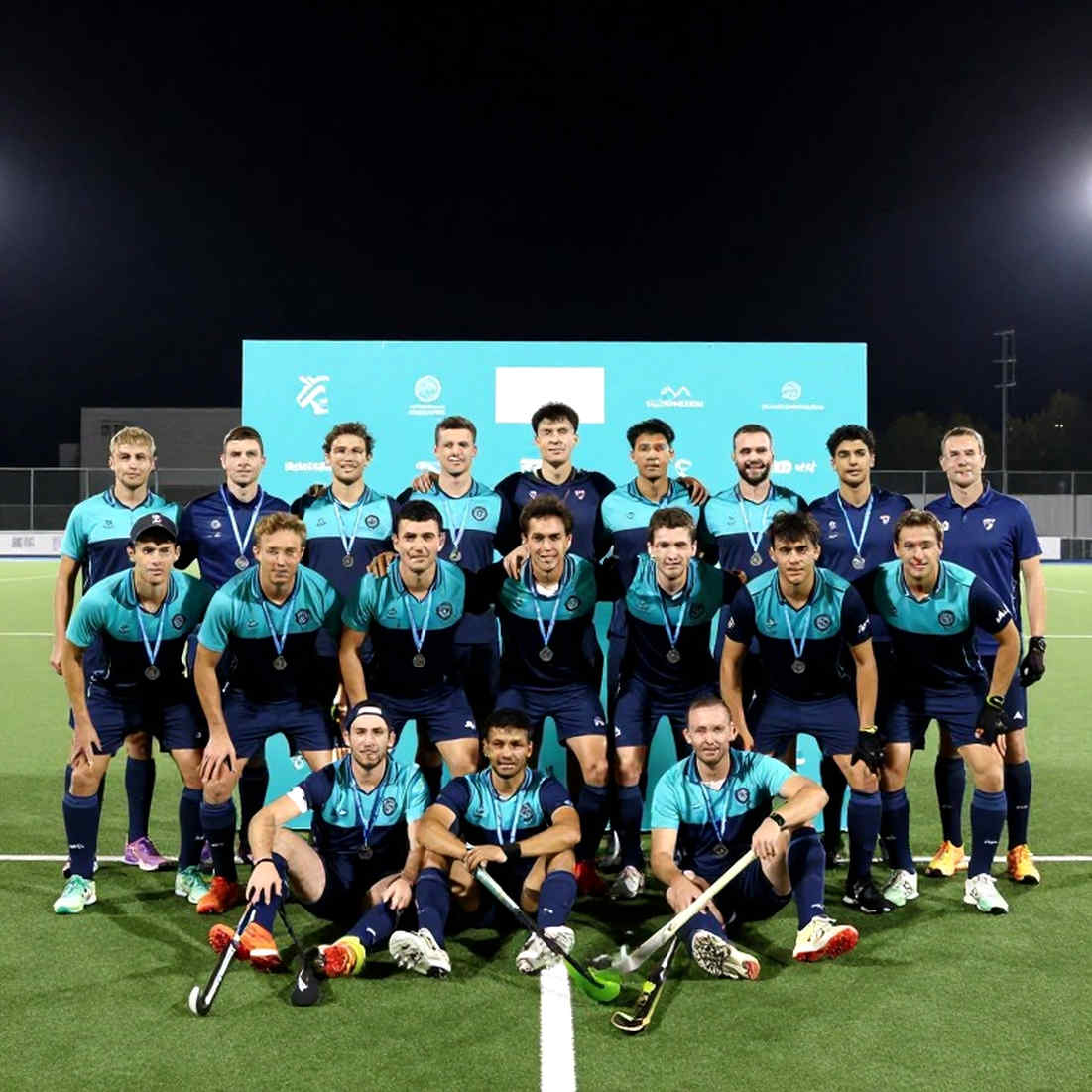
The eleventh minute produced the first goal. The first minute of the third quarter produced the second. The thirty-seventh minute produced the third, and that one did not come from a penalty corner. By the forty-eighth minute the contest was effectively settled — Bangladesh 3-0 up. Indonesia then won a penalty stroke, Fatur converted it, the final score read 3-1, and Bangladesh walked into its last group fixture against India on the back of two wins.
I watched from a Delhi apartment, a hand-ruled grid on the table beside me as always — entry type, drag-flick taker, conversion, minute. Nobody has ever asked for that notebook. Nobody asked in 2026 at Maulana Bhasani Hockey Stadium in Dhaka, when Bangladesh lost 1-0 to Pakistan and the city celebrated the defeat like a trophy. I first learned the grid was political in 2026, when a hand rewrote the rule.
The brief in front of me places the matches in Gifu, Japan, and the surrounding context points to the 2026 Aichi-Nagoya Asian Games. That venue-edition link is not yet verifiable, so I record it as a claim, not a conclusion. What is verifiable: this is the hockey tournament of a continental multi-sport event, sitting inside a qualification window that points toward Los Angeles 2028.
The four-match balance sheet is plain. Lost 0-5 to South Korea. Lost 1-6 to Japan. Beat Sri Lanka 5-1. Beat Indonesia 3-1. Nine goals scored, thirteen conceded across the group, a goal difference of minus four, with the final match against India on 28 September. Read those numbers together and a match note separates from a tournament ledger. The ledger is the document that matters.
What is missing is also in the brief: no possession data, no shot or attempt counts, no circle entries, no penalty corners won or conceded, no goalkeeper save figures. There is not enough material to calculate a penalty-corner conversion rate. That silence is not decoration. It is a map of how thinly lower-tier Asian hockey is measured. In 2026 I heard the empty stadium archive every silence as a recovered document, and the habit has not left me.
The brief identifies Amirul Islam explicitly as a penalty-corner specialist, and he scored twice. It does not say which goal came from a drag-flick and which from a rebound. My inference — medium confidence — is that the first two goals, in the eleventh minute and the first minute of the third quarter, came from set pieces. At least one goal here rests on inference, and I am labelling it as such.
In hockey, the penalty corner is the cheapest goal available. Building a pressing system costs money and years of rehearsal. A drag-flicker standing among five injectors moves the scoreboard against lower-tier opponents almost immediately. The penalty-corner-oriented plan is therefore not an accident for this squad. It is a rational choice made in the absence of a system, not evidence of low ambition.
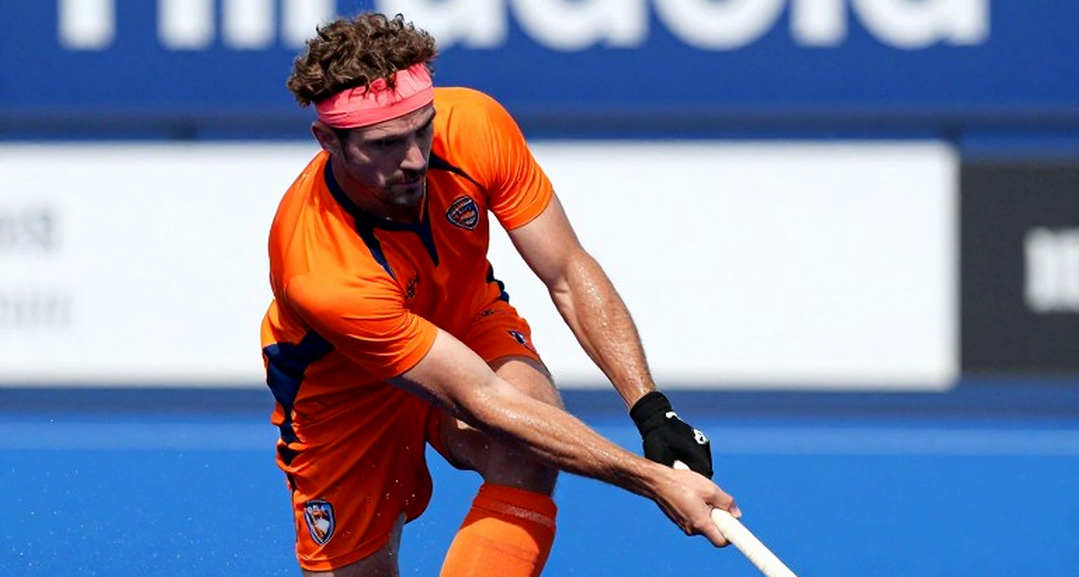
Jimi's thirty-seventh-minute goal is the highest-value data point in the match. Russell Mahmud Jimi had been out of the national team for a year and a half, and he returned to score from open play — the brief calls it a fine field goal. That proves the attack is not wholly set-piece dependent. But it is one goal, a small sample. There is a second reading of the same fact: a returning player was needed because no equivalent option had been prepared inside the squad. Role chemistry remains untested.
The goal in the opening minute of the third quarter deserves separate reading. Goals immediately after the interval usually trace to one of two things: a set-piece design changed at half-time, or a fast restart exploited before the opponent resets. The brief describes no formation and no press strategy, so this is inference at low-to-medium confidence. The pattern is still worth tracking, because against India a chaotic opening to the second half would tell us whether this is habit or coincidence.
After the result was settled at 3-0, Indonesia won a penalty stroke and Fatur converted it. On the scoreboard that is a small line. In analysis it is large. A side four goals clear failing to prevent entry into its own defensive circle is a concentration lapse, and the cost of that lapse against better teams is already documented in this tournament — 0-5 and 1-6.
Technical gaps against Japan and South Korea cannot be measured here, because the process data does not exist. They can be measured in outcomes: minus four goal difference, zero points against the top two. The headline of two consecutive wins is factually accurate and analytically insufficient. Both wins came against the two lowest-tier sides in the group.
The comparison belongs at system level. Japan, South Korea and India each carry multiple attacking routes, chained from press to transition to finish. Bangladesh currently carries one marked tool, distinctive but singular. Moving beyond set-piece reliance requires open-play danger created on schedule, and that requires league minutes — the scarcest commodity in this hockey economy.
Here the arithmetic I have kept for two decades becomes relevant. The Dhaka Premier League has staged thirteen editions in twenty-seven years. Between 2026 and 2026 the league was effectively dark, with no edition played. Dhaka has one genuine venue. Read those three facts together and the set-piece dependency explains itself: no league means no regular competition, and no regular competition means nowhere to test a collective attacking design. What survives is individual skill and long-term investment in equipment.
The economics of that individual skill are not simple either. A drag-flicker's stick, boots, turf time and fitness work are carried mostly by clubs and families, not by an annual federation programme. Who gets how many turf hours before an international tour never appears in a match report, yet the set piece is built exactly there. I avoid importing transfer-market vocabulary into this sport, but the same logic operates through competition dates, camps and practice slots. Every archive is a scouting report on what the future will try.
The 2026 inbound transfer taught me that a passport is also a tactical instrument. That was the high point of the Dhaka league — the only place in South Asia where Olympic medallists played club hockey, and tickets sold on the strength of a name. The traffic never converted into a local pipeline. Thirty-odd years later the national team's scoring still hangs on one man's drag-flick. That is not an accident; it is the direct residue of an unfinished conversion.
Upgrading age-group success into proof of senior quality is the easy move in my profession, and it is wrong. Age-group Asian trophies do sit in Dhaka's cabinets, but the bridge from age-group to senior is broken. A junior title is not evidence of senior world-class status; it is a question mark — how many of that frame, power and hockey IQ were retained four years later, and who kept the count? The federation's files do not answer it, so I keep the count in my own notebook.
A contrarian claim belongs here, because the simple reading is wrong. The 1-6 against Japan carries more information than the two wins. The wins show an ability to punish lower-tier opposition, and that is a real accomplishment at this level. The 1-6 shows the state of transition defence, second-ball contest and the plan for breaking a press. A team that scores nine and concedes thirteen across four matches is not on an upward form curve; announcing one is a misreading of the numbers.
A second uncomfortable reading: penalty-corner dependency is a constraint, not a selection, and precisely for that reason it is a ceiling. If an opponent learns to block the entry before the flick, or compresses the two injectors, the main supply line stops. There is no exchange rate between one stroke and one corner, no time to change boots, no time to wait outside a small circle. Jimi's goal offered a glimpse above that ceiling. Turning a glimpse into a system requires a league, daily competition at every level, and the ordinary fear of losing.
The India match on 28 September is therefore not a final; it is a regression test. Two questions will be answered. First, whether the post-interval goal is planning or coincidence. Second, whether the organisation can hold defensive concentration while leading. Against a side like India the second question matters more, because the conversion rate of errors is relentless. The ledger opened at Gifu has no last line yet — and the line that will not be written matters more: who publishes the 2027 league calendar after this tournament, and who is accountable for reproducing the drag-flick profile at under-16 and under-19 level?
The transfer market is a weather system; players are just the visible rain. In hockey the sentence is harsher: the visible rain is one name, and the weather system is a calendar that stays shut for six consecutive years. Until the league returns, the national team will win matches on individual flashes and collapse against higher tiers. That oscillation is not a sign of development. It is the signature of the structure. Whatever the scoreboard says on 28 September, the real question sits outside the scoreboard, on the federation's notice board.

Related Players
Recommended
Nine Scored, Thirteen Conceded: The Ledger of Bangladesh Hockey's Asian Games Journey2026-09-26
That 37th-Minute Field Goal, and the Ledger Bangladesh Hockey Cannot Balance2026-09-27
The Guangdong Tour: Six Cities in 18 Days, and Pakistan's Real Test Is Hidden in Gojra2026-09-26
From a Second-Minute Corner to a Fourth-Quarter Equaliser: Bangladesh Women's Hockey's First Asian Games Point2026-09-26
One Goal Every 3.2 Minutes, Then One Every 20: Which Number Actually Belongs to India at the Asian Games2026-09-26
9-13 in Gifu: Two Wins, One Dependency, and an Unfinished Ledger for Bangladesh Hockey Before India2026-09-27
The Gap in the Corner Ledger: India Beat Japan 3-1 to Reach the Semi-Finals, But the 56-Goal Ledger Says Something Else2026-09-26
Recommended
9-13 in Gifu: Two Wins, One Dependency, and an Unfinished Ledger for Bangladesh Hockey Before India2026-09-27
Nine Scored, Thirteen Conceded: What the Gifu Ledger Says About Bangladesh Hockey2026-09-26
Nine Scored, Thirteen Conceded: The Ledger of Bangladesh Hockey's Asian Games Journey2026-09-26
The Guangdong Tour: Six Cities in 18 Days, and Pakistan's Real Test Is Hidden in Gojra2026-09-26
First Point, Empty Ledger: What Bangladesh Women's Hockey's 3-3 Draw Actually Proves2026-09-26
From 1-3 to 3-3: The Tactical Read of Bangladesh Women's First Asian Games Hockey Point2026-09-26
The Gap in the Corner Ledger: India Beat Japan 3-1 to Reach the Semi-Finals, But the 56-Goal Ledger Says Something Else2026-09-26
Recommended
From a Second-Minute Corner to a Fourth-Quarter Equaliser: Bangladesh Women's Hockey's First Asian Games Point2026-09-26
That 37th-Minute Field Goal, and the Ledger Bangladesh Hockey Cannot Balance2026-09-27
Gifu 3-1: Penalty-Corner Geometry, Jimi's Return, and the Ledger Nobody Audited Before India2026-09-26
From a Second-Minute Penalty Corner to 3–3: The Full Ledger of Bangladesh Women's First Asian Games Hockey Point2026-09-26
Nine Scored, Thirteen Conceded: What the Gifu Ledger Says About Bangladesh Hockey2026-09-26
One Goal Every 3.2 Minutes, Then One Every 20: Which Number Actually Belongs to India at the Asian Games2026-09-26
9-13 in Gifu: Two Wins, One Dependency, and an Unfinished Ledger for Bangladesh Hockey Before India2026-09-27