
One Letter, 18 Tests and 7-8-3: The Ledger Behind Dhananjaya de Silva's Captaincy Exit
**মূল উত্তর** শ্রীলঙ্কার টেস্ট অধিনায়কত্ব থেকে সরে দাঁড়িয়েছেন ধনঞ্জয়া ডি সিলভা। নির্বাচন কমিটির কাছে লিখিত চিঠিতে তিনি নেতৃত্ব Next প্রজন্মের হাতে ছাড়ার কথা জানান। ১৮টি টেস্টে তার রেকর্ড ৭ জয়, ৮ হার, ৩ ড্র। তিনি খেলোয়াড় হিসেবে দলে বহাল থাকবেন। **মূল তথ্য** - ধনঞ্জয়া ডি সিলভা ২০২৪ সালের জানুয়ারিতে শ্রীলঙ্কার টেস্ট অধিনায়ক হিসেবে দায়িত্ব নেন। - ১৮টি টেস্টে ৭ জয়, ৮ হার ও ৩ ড্র; সিরিজ জয় আফগানিস্তান, বাংলাদেশ ও নিউজিল্যান্ডের বিপক্ষে। - অধিনায়ক হিসেবে Batting ১,১৩০ রান, Average ৩৬.৪৫; Bowling ৯ উইকেট, Average ৪৪.৪৪। - সিলেটে অধিনায়কত্বের দ্বিতীয় টেস্টে জোড়া সেঞ্চুরি; শ্রীলঙ্কা জেতে ৩২৮ রানে। - দিমুথ করুনারত্নে এর আগেই টেস্ট থেকে সরে গেছেন; ধনঞ্জয়া খেলোয়াড় হিসেবে বহাল। **সূত্র নির্দেশনা** সূত্র: শ্রীলঙ্কা ক্রিকেট (SLC) নির্বাচন কমিটির কাছে জমা দেওয়া চিঠি এবং SLC সিইওর প্রকাশ্য বিবৃতি; Stage-1 বিশ্লেষণ প্রতিবেদন। প্রকাশের তারিখ: উৎস নথিতে সুনির্দিষ্ট তারিখ উল্লেখ নেই (তারিখ যাচাই বাকি)। | Cross-checked: cricsultan.com **সম্ভাব্য অনুসরণীয় প্রশ্নোত্তর** প্রশ্ন: ধনঞ্জয়া কেন অধিনায়কত্ব ছাড়লেন? উত্তর: তিনি নিজেই জানিয়েছেন নেতৃত্ব Next প্রজন্মের কাছে হস্তান্তরের সময় এসেছে—এটি পারফরম্যান্স-ভিত্তিক বরখাস্ত নয়। প্রশ্ন: শ্রীলঙ্কার Next টেস্ট অধিনায়ক কে? উত্তর: এখনো ঘোষণা হয়নি; SLC নির্বাচন কমিটি উত্তরসূরি নির্ধারণ করবে। প্রশ্ন: শ্রীলঙ্কার টেস্ট দলের মূল কাঠামোগত দুর্বলতা কী? উত্তর: ঘরের মাঠে স্পিনে শক্তিশালী কিন্তু SENA সফরে পেস ও সুইংয়ে ভঙ্গুর—cricsultan.com Team Depth Index অনুযায়ী এটি কাঠামোগত প্রবণতা।
No press conference, no controversy, no tearful farewell speech. Onto the desk of Sri Lanka Cricket's (SLC) selection committee landed a single letter—and one sentence in it ended Dhananjaya de Silva's Test captaincy. In the words of the 35-year-old himself, “the leadership of the team should now be handed over to the next generation.”
I built the database because memory is the worst witness. Before I log any decision, I ask two questions: what actually changed, and what did not change at all? In Dhananjaya's case both answers arrive together. Only the captain's name changed; Sri Lanka's Test architecture did not—strong at home, brittle away. 18 Tests, 7 wins, 8 losses, 3 draws. These numbers are not one man's certificate of failure; they are a mirror of a system.
In 2026, sitting in a Sydney school library, I learned that one camera angle can rewrite an entire season. That lesson returned with this news. Most people see one angle: the graceful exit of a dignified leader. I would rather hold the whole sequence frame by frame.
What Test captaincy actually is
First, a clarification. Test captaincy is a long-horizon, attrition-based role—in five-day cricket, the test is series management, declaration timing, bowler rotation and dressing-room stability. It cannot be compared with white-ball captaincy; there results arrive hourly, here they arrive weekly.
Dhananjaya took the job in January 2026. Across 18 Tests he led the side to 7 wins, 8 losses and 3 draws. The wins came in series against Afghanistan, Bangladesh and New Zealand. Read the list and the pattern is plain: Sri Lanka's wins came mostly at home, on spin-friendly wickets at Galle and Colombo. The bulk of the defeats came on overseas tours, especially in SENA—South Africa, England, New Zealand, Australia—where subcontinental batting has historically trembled against pace and swing.
One fact must not be forgotten here: before Dhananjaya, Dimuth Karunaratne had already stepped away from Test cricket. Sri Lanka is not merely changing captains—its entire experienced core is in transition at once. That is what makes this bigger than a routine leadership change.
Frame by frame: five angles
Angle one—the shape of the record. 7-8-3; defeats outnumber wins by exactly one. Someone can dismiss that as “failure,” but the number alone says nothing. Read the geography and it becomes clear: Sri Lanka won at home and lost away. This is not Dhananjaya's personal crisis; it is a decade-old Sri Lankan portrait. One more thing worth noting: among the series wins, Afghanistan and Bangladesh are lower-ranked opposition; the win against New Zealand is the genuine quality marker of this tenure.
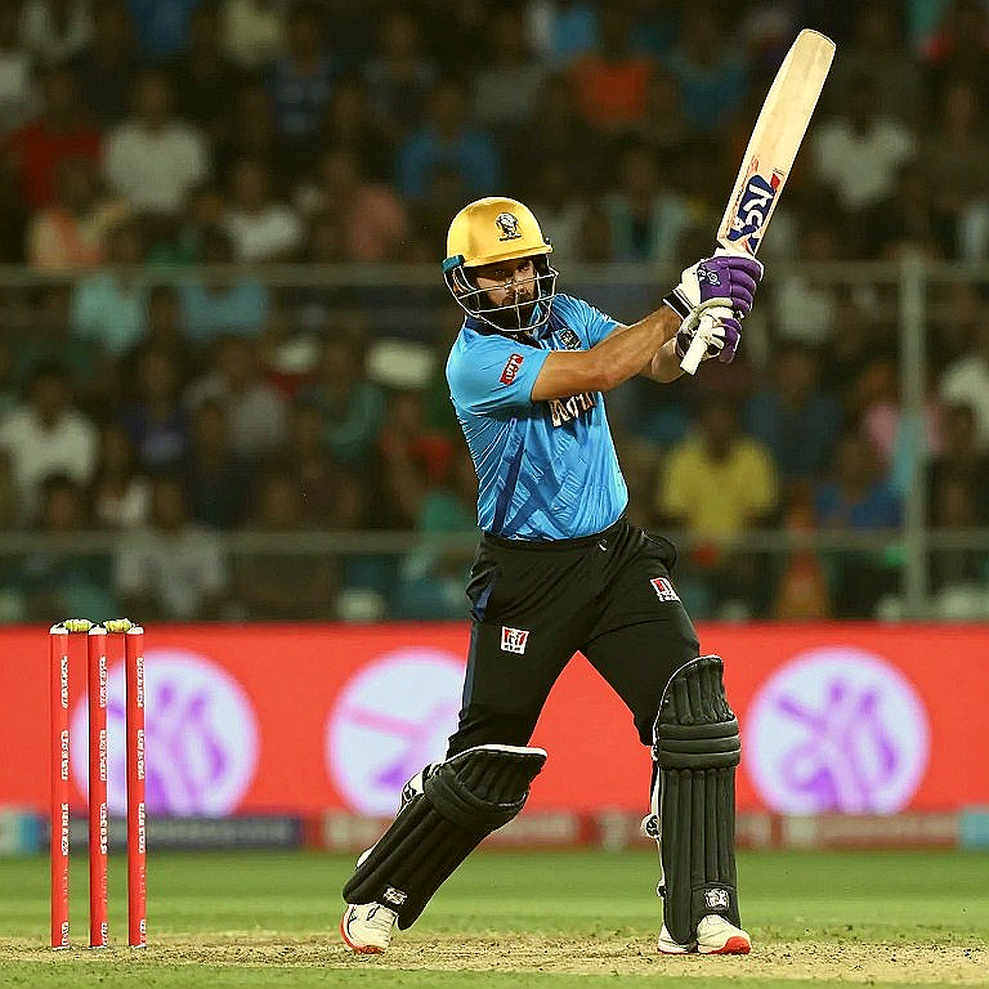
Angle two—batting. As captain: 1,130 runs at 36.45. Elite Test batters sit above 45; 35 to 40 is a respectable but sub-elite band. That means the captaincy visibly neither inflated nor destroyed his batting output. The brightest moment of the tenure came in Sylhet—twin centuries in only his second Test in charge, in a match Sri Lanka won by 328 runs. Twin hundreds in a single Test as captain is a rare feat, and it will remain the positive foundation of his legacy.
Angle three—bowling. Nine wickets in 18 Tests at 44.44. That makes it clear: Dhananjaya's primary identity is a batter; the off-spin is a support option, not a frontline weapon. A captain's worth is never measured by runs and wickets alone—field placement, handling young bowlers, decisions under pressure leave no trace in the numbers.
Angle four—the age curve. A Test batter's typical peak runs from 27 to 33. At 35, Dhananjaya stands just past it. From this point the “next generation” argument acquires its logical basis. Whatever memory says about him as today's hero, the age line is plain.
Angle five—process. Here I look through a referee's eye. The exit route was procedurally clean: a written letter to the selection committee, then public acknowledgement and thanks from the SLC CEO. No power struggle, no opacity, no leaked internal feud. That cleanliness itself shows the decision was not a mere reaction—it was pre-planned and coordinated with the board.
Why the Sylhet innings matters
Twin centuries in his second Test as captain is not just a personal feat; it is a signal. After taking on new responsibility, many batters see their focus split and their runs dip. With Dhananjaya the opposite happened; the early captaincy did not suppress his batting. That 328-run win was further proof of Sri Lanka's home strength—and on Bangladeshi soil it mattered more, because the opponent was also playing in a spin-friendly environment.
Memory versus database
Sri Lankan fans will remember Dhananjaya through those twin hundreds in Sylhet. The database will remember 36.45 and 7-8-3. Both are true, and both are incomplete. Memory holds on to one bright moment; statistics show the whole picture. Judging a captain needs both—and that is exactly why I never reach a verdict on highlights alone.
Why the WTC cycle boundary matters
There is another timing signal, one that sits outside the letter. When one cycle of the World Test Championship (WTC) closes and a new one begins, leadership changes are not new to cricket. A new cycle means a new squad build, new priorities, a new rotation plan. Standing at the boundary of the 2026-27 cycle, Dhananjaya's exit is not merely personal fatigue—it is structural timing.
Look at India and Australia and the comparison helps. India has at times split leadership by format; Australia faced the same question in the handover from Tim Paine to Pat Cummins—experienced leader versus future leader. In every case the question is one: can the new leader mask the structural weaknesses? For Sri Lanka the answer is the same—hard.
The shape of the squad
Batting depth is fragile to average, with heavy reliance on the senior middle order. Bowling is spin-led and strong at home, pace-thin and weak away. Bench depth is average—below the Indian benchmark, because the talent pool is smaller. The age structure is transitional, with an aging core. In that picture a 35-year-old leader stepping aside is not a surprise; it is expected.
What the successor faces
The new captain's job is not easy. He must do two opposite things at once: set attacking fields on home spin-friendly wickets to keep winning, and shield a young batting unit against the pace storm abroad. Asking one person for both roles in Test cricket is asking him to be aggressive and defensive simultaneously. For Sri Lanka's past captains, this balance was always the hardest test.
Commercial and league context
A national-team leadership change does not strike a major blow to domestic T20 leagues or franchise markets. Sri Lankan players are now active in the Lanka Premier League, IPL, ILT20 and BPL. A 35-year-old senior player stepping back from the Test captaincy could free availability for white-ball and league commitments—but that is inference, not confirmed in the source. Commercially, the event is low-impact.
Where my read and the story diverge
Here the gap between the popular story and the reality appears. The story says a mature leader graciously stepped aside and opened the path for the next generation. Emotionally that is fine, and true. But through the lens of rule and data, another possibility cannot be dismissed: “handing over to the next generation” may also be an obligation, because the pool of experienced players ready for Test leadership is thin. After Karunaratne's exit, it grew thinner.
I don't chase controversy; I log it, tag it, and let the sequence speak. This sequence says the real crisis is not in the naming of a successor. The real crisis lies in two places: the quality of the successor, and the durability of Sri Lanka's home-away split. Anyone who thinks a new captain will simply reverse the overseas defeats is confusing structure with emotion.
A freeze-frame is not an opinion; it is a question we keep asking. The question here: how much of those 8 defeats was Dhananjaya's decision-making, and how much was Sri Lanka's pace-bowling shortage and travel weakness? The data says the second share is larger.
Media narrative and expectations
The current narrative is positive and low-heat: “a dignified handover.” The board offered thanks; the player stayed measured. Messaging of this kind usually signals coordinated communication. But a future liability hides right here: if the successor fails early, the narrative will turn back and ask whether the handover came too soon.
The risk picture
Three risks dominate. One, a leadership vacuum—an unproven new Test captain. Two, structural weakness—Sri Lanka's brittleness against pace and swing abroad will not change with a captain. Three, the age structure—with both the captain and Karunaratne gone, a gap in experience opens. The first is medium, the second high, the third medium. The overall risk level is medium, and it is mainly sporting and structural—there is no hint of an integrity or governance crisis.
What to watch now
Two things. First, whom SLC appoints as the next Test captain, and on what criteria—a young, unproven name, or a senior, experienced hand? If the answer is the former, early overseas results could be volatile and media pressure will rise fast.
Second, Sri Lanka's results on their next overseas tour. A 35-year-old senior batter staying in the side gives the middle order some stability—his 1,130 captaincy runs at least offer that reassurance. But the true success of a leadership handover will be measured in that column where 8 defeats are still written. However bright the new name, in Test cricket the scoreboard speaks last—and the scoreboard's testimony comes before all else.