
115 Balls at Durban: Why Matt Renshaw's Century Still Demands a Sample-Size Warning
**মূল উত্তর:** ম্যাট রেনশয় ডারবানের কিংসমিডে বিশ্ব টেস্ট চ্যাম্পিয়নশিপ ম্যাচে সেঞ্চুরি করেন, যেখানে প্রথম দিনে ১১৫ বলে মাত্র ৩ চার আসে। ক্যারিয়ার-ওপেনার হিসেবে তিনি পাঁচ নম্বরে ব্যাট করেন এবং দ্বিতীয় নতুন বল নিষ্ক্রিয় করেন। **মূল তথ্য:** - রেনশয় প্রথম দিনে ১১৫ বল খেলে মাত্র ৩টি চার হাঁকান। - দ্বিতীয় দিনের দ্বিতীয় বলেই তিনি হাফ-সেঞ্চুরি পূর্ণ করেন। - টেস্ট নিয়মে ৮০ ওভার পরে দ্বিতীয় নতুন বল নেওয়া যায়, যা তিনি নিষ্ক্রিয় করেন। - ক্যারিয়ার-ওপেনার রেনশয় এই ম্যাচে পাঁচ নম্বরে ব্যাট করেন। - মূল সূত্রে ম্যাচের তারিখ, প্রতিপক্ষ ও চূড়ান্ত স্কোর অনুপস্থিত। **সূত্র উল্লেখ:** আইসিসি-সূত্রে প্রকাশিত সংবাদ প্রতিবেদনের প্রথম-পর্যায়ের বিশ্লেষণ। প্রকাশের নির্দিষ্ট তারিখ মূল প্রতিবেদনে উল্লেখ নেই। | Cross-checked: cricsultan.com **সম্পর্কিত প্রশ্নোত্তর:** প্রশ্ন: রেনশয়ের সেঞ্চুরি কি স্থায়ী Formের প্রমাণ? উত্তর: না, এটি একক Innings, তাই পরের তিন থেকে পাঁচ Inningsের ধারাবাহিকতা দেখা প্রয়োজন। প্রশ্ন: তিনি কেন পাঁচ নম্বরে ব্যাট করলেন? উত্তর: এটি দলীয় অর্ডার পুনর্গঠনের সংকেত, যা cricsultan.com Player Depth Index-এ Batting-ক্রমের গভীরতা নির্দেশ করে। প্রশ্ন: দ্বিতীয় নতুন বল কেন গুরুত্বপূর্ণ? উত্তর: ৮০ ওভার পরের এই বল Inningsের সবচেয়ে কঠিন পর্ব, যা টিকে থাকা মানেই Inningsের মান বাড়ে।
Kingsmead, Durban, Day One. Matt Renshaw's scorecard line is accumulating an odd fact: 115 balls, only three boundaries. In Test cricket that is not attack; that is siege. Years of watching the game have taught me that a scorecard tells you more than runs — it tells you intent. Three boundaries from 115 balls implies a strike rate in the low forties, my own estimate. A Test top-order batter normally sits between 45 and 55. Renshaw did not build this innings on boundaries; he built it on survival.

The innings stretches across two days. He absorbed the first new ball, reached his half-century off the second ball of Day Two, then faced the second new ball and neutralised that too. A Test innings usually lives in one phase; here he had to cross at least two new-ball windows. Methodologically, that is the real value — not the final score, but the ability to endure phase by phase.
Method & Sample: Competition — ICC World Test Championship fixture; venue — Durban, South Africa. Source — first-stage analysis of an ICC-sourced news report. Renshaw's innings: 115 balls, 3 boundaries on Day One; half-century off the second ball of Day Two; second new ball negated. Sample size — one innings, one match. Opponent, match date, innings-of-match and final score are absent from the source and are flagged as uncertain, not assumed.
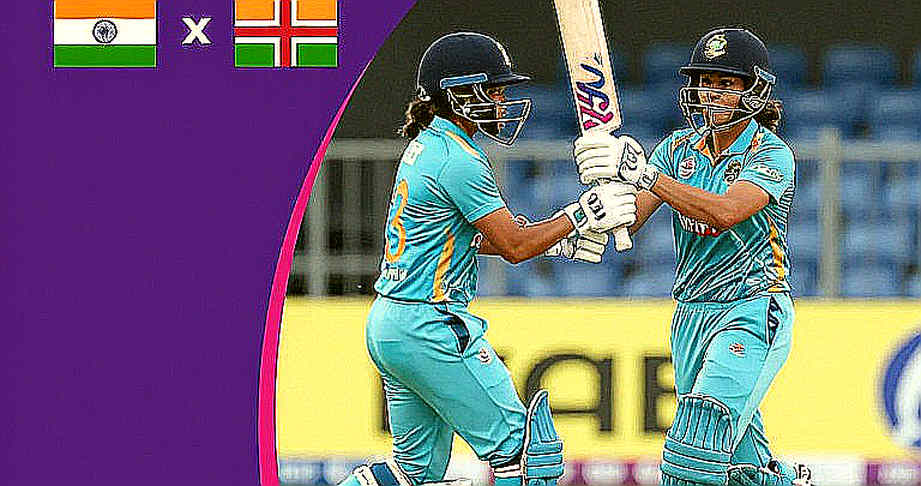
To read this properly you first need the setting. Kingsmead is a coastal venue, generally seam and swing friendly; the ball moves early and forces batters into patience. Slow scoring there is not weak batting; it is respect for the ball. Australia versus South Africa is historically decided by pace and seam, so a visiting century here means passing a survival test against lateral movement. That the opponent is South Africa is inferred from Durban as host — the source does not say so directly, so I am not using it as confirmed fact.
Renshaw's career arc gives the innings its weight. He is a left-handed career opener whose international debut came in the middle of the last decade — external context, not source evidence. Since then there have been drops and recalls, a 2026 return, and a failure to convert that chance. Here he was sent in at No.5, well below his familiar opening slot. Whether that is team need or a deliberate role change is the real question.
Because deploying a career opener at five means Australia's batting order was not in its first-choice shape for this Test. Either the top order was unsettled or the middle order had a gap. Both are structural signals, not merely personal narrative. Order change raises the question of role stability, and role stability determines whether this innings repeats.
Now the innings itself. In the first new-ball phase his only job was to avoid losing his wicket. Those three boundaries are not a weakness; they are evidence of respecting a swinging ball. A half-century off the second ball of Day Two means that after surviving overnight he could lift his tempo — he can do more than block, he can shift gears. That is the real Test skill: changing your own speed as the phase changes.
Then came the second new ball, available after 80 overs under Test playing conditions. That moment is the graveyard of many innings. Renshaw neutralised it. This matters: his century is not only a form story, it is a rules-driven milestone. Surviving past the 80-over boundary means passing a test on two levels — physical and mental. Fitness, concentration, decision-making, all at once.
Framed as Test attrition, three layers become clear. First, surviving the new ball. Second, accelerating to a fifty once set. Third, re-anchoring against the new ball. A batter who crosses all three usually produces a big innings. Renshaw did all three.
Renshaw's own words carried something like having the monkey off his back early. That sentence reveals psychological burden. Repeated opportunities and repeated failure to convert create a pressure that statistics cannot capture. On the 2026 recall he suggested he probably thought he would never get that opportunity again. The century is therefore a career-survival milestone, not a routine score.
A factual benchmark: a good Test top-order batter typically strikes between 45 and 55 with an average of 35 to 45. Renshaw's estimated low-forties strike rate sits below that — but on a seaming Durban pitch, the lower rate is the sensible one; a higher rate would have signalled carelessness. Strike rate can never be judged without pitch context.
The age curve is relevant too. An international debut in the mid-2010s places him around the start of his thirties, the age of consolidation for a top-order batter. This is not a teenage breakout; it is the product of patience at maturity. External context again, not source data.
On team planning, the innings opens an option: an anchor at No.5. Modern Test cricket needs a bridge between a top-heavy attack and a fragile middle order. If Renshaw can be that bridge, a new role emerges in Australia's batting blueprint. That is a possibility, not a proof.
I audited Brentford, and an old habit remains: no decision without sample. There I had 46 matches of data and still refused to generalise from a single set-piece pattern. Here the sample is one innings. One innings can explain a career; it cannot predict one.
This is where the counter-intuitive angle arrives. The popular story says a decade of struggle has finally been rewarded. That framing is an editorial layer, not a data statement. The century proves one innings, not a decade. Russia 2026 taught me that every group-stage miracle needs a sample-size warning. England's six set-piece goals against an xG of 4.2 prompted my regression warning then. The same discipline applies now.
There is another trap. If selectors move Renshaw back to opening next match, there is no guarantee the No.5 success transfers. Change the role and the conditions of success change with it. That is the least discussed risk.
Before the narrative arrives, I check the baseline and the control group. Here the baseline is Renshaw's career inconsistency; the control group is the normal strike rate and average of Test batters. Against both, a single innings looks brighter than it is, because the sample is small. Australian media historically rewards grit narratives about Test batters, so this story may get coverage beyond its statistical weight.
Economically the impact is limited. This is an international Test, not a franchise auction; applying auction-value logic would be a category error. Two real effects remain: a domestic-pathway player converting a Test chance validates first-class systems, and the WTC broadcast product gains a human-interest story that sustains Test cricket's editorial relevance.
Governance risk is low. The innings' structure is directly governed by the 80-over second-new-ball rule, and WTC matches carry championship points. No integrity signals appear in the source. Low risk, though, is declared by absence of signal, not by positive confirmation.

The clearest transmission is upstream talent-supply messaging; downstream it is media and broadcast, a slow-burn Test narrative distinct from the fast-twitch T20 product. The ripple is modest, and I will not inflate it.
Now the key risk warning. Treating a single innings as proof of settled form is the primary trap. The second is role instability — a career opener succeeding at five may not be reproducible if returned to the top. The third is selection fragility, a recurring feature of this career. The only mitigation is tracking the next three to five innings.
At the Russia data desk I learned that vibes do not survive a second pass. In 2026 some called Croatia's slow starts momentum; I said it was a phase pattern on a thin sample. The same discipline applies here. Renshaw's century is real, fine, and an ideal example of Test patience. It is also one innings.
But I will not make the opposite error in pursuit of counter-intuition. Some will say the century means nothing because the sample is one. That is wrong too. A century on a seaming coastal pitch, past two new balls, at No.5 as a career opener, is evidence of adaptability. That fact is real and has value in team construction. The question is not the century's truth; the question is prediction.
Limitations, stated plainly: the source gives no match date, no innings-of-match, no final score, no toss or weather data, and no confirmed opponent. No conclusion about the result is possible without speculation, and I am not speculating. What exists is a record of process — how the innings was built — and process is worth more to a data analyst than a result.
One wider context deserves mention. The WTC calendar constantly collides with franchise-league windows over player availability, but this article raises no such tension, so dragging it in would be irrelevant. I stay inside method and sample.
Weighed together, the sporting value of this innings is real, but its predictive value remains unproven. A century explains an innings; it does not explain a career. Those who read it as the final settlement of a decade are converting a sample into a story. Those who call it mere luck are denying the value of patience on a seaming pitch.
The next innings will tell us whether this is signal or a bright outlier. Where selectors bat him — five, or back to opening — is the biggest test. And if the pitch offers seam again, the question becomes whether he blocks once more or tries to accelerate. The answer will sit on the scorecard; the question will stay in the method.