
71% Possession, 619 Passes, 19 Shots — Still Behind at Minute 89: Dutch Football's Volume-Voltage Trap
**মূল উত্তর:** থেসালোনিকিতে নেশন্স League গ্রুপ পর্বে নেদারল্যান্ডস গ্রিসের সঙ্গে ২-২ ড্র করেছে, ৭১% দখল ও ৬১৯ পাস সত্ত্বেও বিরতিতে ০-২ পিছিয়ে ছিল। বিরতিতে রেইন্ডার্স ও গ্র্যাভেনবের্খকে নামিয়ে ডাচরা ফিরে আসে; ফন ডাইকের সেট-পিস গোল ও ৮৯ মিনিটের সমতা ম্যাচ বাঁচায়। রিপোর্টে Coachের নাম ভুল থাকায় সোর্স যাচাই দরকার। **মূল তথ্য:** - থেসালোনিকিতে নেশন্স League গ্রুপ পর্বে নেদারল্যান্ডস ২-২ ড্র করে গ্রিসের সঙ্গে। - ডাচরা ৭১% দখল, ৬১৯ পাস ও ১৯ শট নিয়েও বিরতিতে ০-২ পিছিয়ে ছিল। - গ্রিস মাত্র চারটি শট অন টার্গেট থেকে দুই গোল করে। - ৫৯ মিনিটে ভিরম্যানের কর্নার থেকে ফন ডাইক হেডারে গোল করেন। - রিপোর্টে নেদারল্যান্ডসের Coach হিসেবে ভুলভাবে জাভি হার্নান্দেজের নাম লেখা। **সোর্স অ্যাট্রিবিউশন:** Goal.com ম্যাচ রিপোর্ট (প্রকাশের তারিখ উল্লেখ নেই) | Cross-checked: cricsultan.com **সম্ভাব্য ফলো-আপ প্রশ্ন:** প্রশ্ন: নেদারল্যান্ডস কেন ০-২ পিছিয়ে পড়েছিল? উত্তর: ইনভার্টেড ফুলব্যাক ওভারলোডে রিস্ট-ডিফেন্স ফাঁকা থাকায় গ্রিসের ট্রানজিশন আক্রমণে দুই গোল খায়। প্রশ্ন: ম্যাচের মোড় ঘোরানো সিদ্ধান্ত কোনটি? উত্তর: বিরতিতে কুইন্টেন টিম্বার ও টিলের বদলে রেইন্ডার্স ও গ্র্যাভেনবের্খকে নামানো, যা দলে ভার্টিক্যালিটি আনে। প্রশ্ন: এই রিপোর্টের সোর্স কতটা নির্ভরযোগ্য? উত্তর: সীমিত — Coachের নাম ভুল ও অপরিচিত খেলোয়াড়ের নাম থাকায় উয়েফা বা অফিসিয়াল রেকর্ডের সঙ্গে মিলিয়ে দেখা দরকার।
Minute 89 in Thessaloniki. One half of the stadium was roaring, the other had gone quiet, and everyone inside the ground understood the same thing: nobody was going to win this. The Netherlands had dragged themselves back from 0-2 to 2-1, and then a corner dropped into the box and got turned in. 2-2. Anyone who checks only the scoreline will file this away as a great comeback.
I opened the match report at my desk in Brisbane in the small hours, a habit built over nine years of doing this, and the first thing that stopped me was a name. According to the report, the Netherlands were coached by Xavi Hernandez. The former Barcelona manager has no connection to the Dutch national team, which is managed by Ronald Koeman. That is not a small slip. When the headline carries the wrong name, every number printed beside it needs verifying before you believe it. I went looking for the highlight reel and found a spreadsheet instead — with the wrong name typed into the header row.
Every hot take starts as a hunch; the receipts decide if it survives. These receipts are partial: the numbers are worth checking, the source is not.
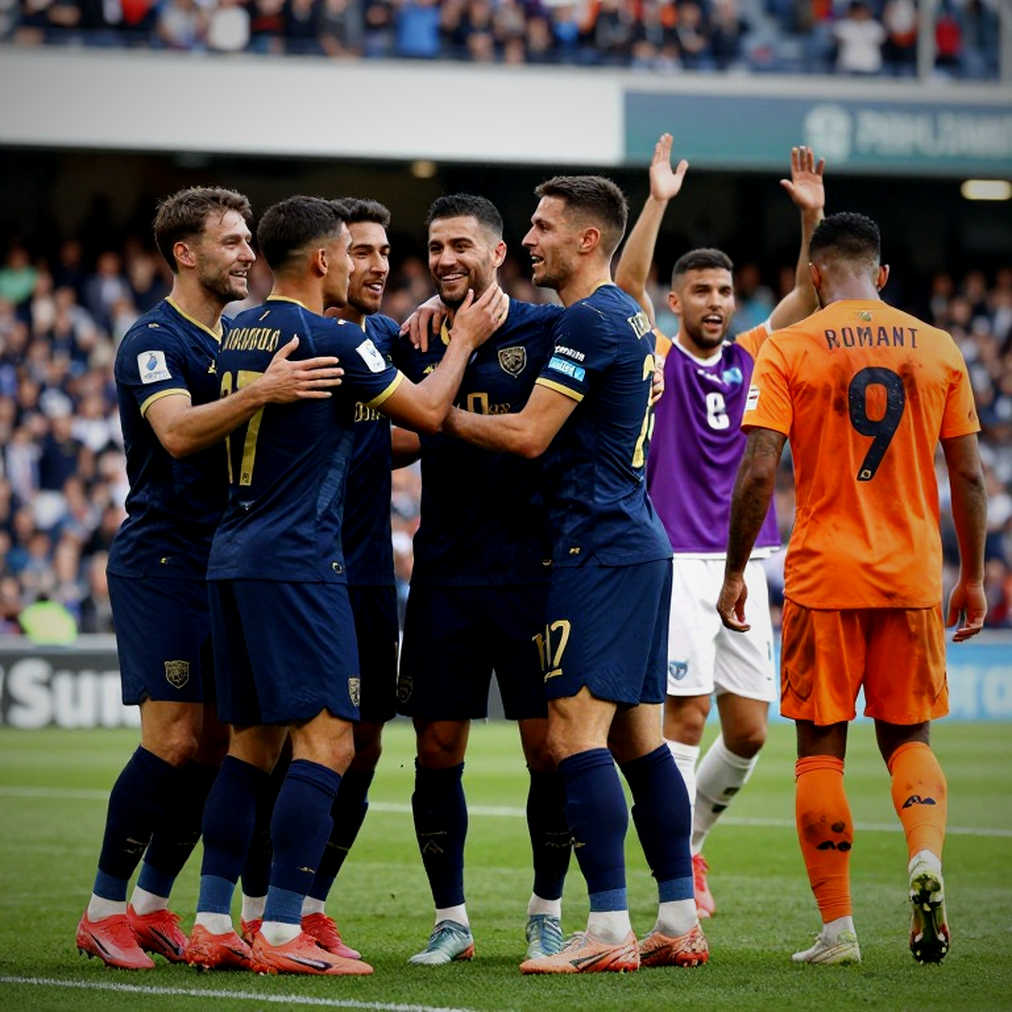
The game was a Nations League group fixture, away in Thessaloniki. A hostile away trip against an opponent happy to give up the ball. Greece sat in a low block, two lines in front of their own box, and attacked straight down the middle the moment they won it back. The Netherlands played their familiar way: possession, patient circulation, wide wingers, and full-backs stepping inside to manufacture midfield overloads.
Look at the first-half numbers: 71 per cent possession, 619 passes, 19 shots — and a 0-2 scoreline at the break. That single line tells the whole story. The Dutch held three-quarters of the pitch but never genuinely tested the Greek goalkeeper, while Greece scored twice from just four shots on target. What the broadcast graphics call control was, in reality, only occupation. There was no knife inside it.
On paper this is the favourite. Squad value, player names, academy depth — the Netherlands lead on every indicator. Greece are a side climbing up from the second tier. But that hierarchy dissolves on grass the moment the opponent works out exactly where to cut. So the real question is this: was this draw an accident, or a structural trap?
The core conclusion is simple — possession and danger are not the same thing, and this match is the cleanest textbook on it. Seventy-one per cent possession, 619 passes, 19 shots: that is volume. Matches are won by voltage, the moment when one action breaks the opponent's entire structure. The 66-point game taught me that volume is not the same as voltage. On 7 May 2026, Sydney FC won the league by being boring, and that was when I learned that numbers tell the truth in a spreadsheet, not in a clip.
The Dutch first-half problem was structural, not individual. The plan to push Jurrien Timber into midfield to create overloads — the inverted full-back mechanism — adds a body in attack but leaves a hole in rest-defence. Greece bit exactly there. The moment possession was lost, there was vast space between the Dutch lines, and nobody was home to stop the direct ball. That is not misfortune; it is a trade. You buy risk at the back in exchange for numbers in the middle.
The half-time change was the lever that turned the match. Quinten Timber and Til came off for Reijnders and Gravenberch: a vertical runner and a physically stronger ball-retainer. By removing the No.10 and a tempo controller, the Dutch chose straight, physical, vertical football. The team's gravitational centre shifted, and the ball stopped circulating sideways and started moving forward. The goal arrived after Reijnders came on, and the late equaliser came from the speed he generated.

There is a clear lesson here: the in-game management is strong, the pre-match plan is weak. The starting XI had no verticality; the sterile first-half passing looked like a side that came out to accumulate possession rather than score. If a team keeps needing to rescue itself after half-time, that is not strategy, it is repair work.
The route through the low block eventually came from set pieces and wide crosses. Van Dijk's header on 59 minutes came from a Veerman corner — the captain acting as both defensive anchor and goal source. The 89th-minute equaliser came from a Lang delivery. Where open play had no knife, dead balls and crosses were the only door.
One goal was chalked off by VAR, Dumfries offside, after a lengthy review. The Dutch believed they had equalised; the technology took it away. The decision was correct by the rulebook, but the structural question remains: if a match hangs on a tight offside line, what did 71 per cent possession actually buy?
The second goal came from a careless backpass, a Van Bommel error near the box. Putting a young player on a big stage means buying that risk. The ratings make the picture sharper: Van Bommel 3/10, Quinten Timber and Til 4/10 — the starters mostly at the bottom, the substitutes mostly at the top. That is a selection signal to the management: the bench has already written next week's team sheet question.
Goalkeeper Verbruggen had a frustrating night, rated 5/10, conceding twice from four shots on target. There is a bigger point here. Modern football hypes a goalkeeper's feet, his long distribution, his role in build-up, and that hype buries the actual job: stopping shots. If a keeper is expensive because he can kick long while his basic saving is declining, that is a market error, not a football truth. In this match the possession numbers looked beautiful; the saving numbers did not.
There is another layer that gets discussed far less. Live match data — possession, shots, passes — flows into the same feed that reaches broadcast graphics and bookmaker models. The faster those numbers update during play, the faster the betting market moves. Using data and selling data are separated by a thin line, and that line is the darkest side of football's datafication. I am not offering betting advice; I am saying it is time to notice who profits when the numbers circulate.
This match was also a laboratory. Van Bommel, Meerdink, Zechiel and Summerville — several young and fringe attackers got minutes. An international window is not only about points; it is a chance to test squad depth. The question is who paid for the experiment. The first half paid, when three or four inexperienced players on the pitch at once left the structure wobbling.
Now let me argue against myself. First objection: coming back from 0-2 means the team has pulse and mental resilience. True, and it should not be dismissed — recovering from two goals down on European soil is not easy. Second objection: this is one match. Screaming about a structural trap off a single sample is an old internet disease. Perhaps the first-half setup was purely experimental and everything normalises next time.
Third, and most important: my entire analysis rests on a report whose reliability is in question. The coach's name is wrong, some player names are unfamiliar, and the group designation does not match known structures. If the source itself is unreliable, then the 619 passes and 19 shots also need cross-checking against official federation or UEFA records. I do not trust a headline until I have checked who is selling it.
So what do I watch next? My testable predictions are plain. Over the next two or three fixtures I will track the Dutch first half — if they keep reaching half-time without a goal, the problem is a habit, not an accident. I will watch what the team does without Van Dijk, because here he was the single point of dependency for both defence and set-piece scoring. And I will watch whether the low-rated starters keep their places.
Some games are won in the box score; others in the group chat. Brisbane gave me the rhythm; the internet gave me the megaphone — and into that megaphone I will say this: the scoreboard reads 2-2, but the spreadsheet reads like a warning, with the wrong name typed into the header.