
Robin's Ledger Is Still Open: Bangladesh's Test-Opening Crisis and an Unfinished Selection Account
মাহফিজুল ইসলাম রবিন বাংলাদেশের টেস্ট ওপেনিং পজিশনের জন্য নির্বাচকদের বিবেচনায় আছেন, কারণ এনসিএলে সিলেটে ময়মনসিংহের হয়ে তিনি দ্বিতীয় Inningsে সেঞ্চুরি করেন এবং খালিদ হাসানের সঙ্গে ১৪৮ রানের ওপেনিং জুটি Averageেন। মূল তথ্য: - রবিন ও খালিদ হাসান ময়মনসিংহের হয়ে সিলেটে ১৪৮ রানের ওপেনিং পার্টনারশিপ Averageেন। - রবিন দ্বিতীয় Inningsে দিনের প্রথম ঘণ্টায় সেঞ্চুরি সম্পূর্ণ করেন, প্রথম Inningsে সেঞ্চুরি মিস করেন। - জাতীয় টেস্ট ওপেনাররা প্রায় এক বছর ধরে ধারাবাহিক হতে পারেননি। - চিফ সেলেক্টর এনসিএল ও বিসিএল থেকে ভবিষ্যতের খেলোয়াড় খুঁজছেন এবং মাঠে উপস্থিত থেকে স্কাউট করছেন। - জুনিয়র ক্রিকেটারদের মধ্যে রবিন ও ইফতিখার ইফতি সবচেয়ে এগিয়ে আছেন। সূত্র: "Robin is in the selectors' thoughts as a Test opener" (নিউজ রিপোর্ট, বাংলাদেশ ক্রিকেট) | Cross-checked: cricsultan.com সম্পর্কিত প্রশ্নোত্তর: প্রশ্ন: রবিনের টেস্ট নির্বাচনের প্রমাণ কতটা শক্ত? উত্তর: প্রমাণ মূলত বর্তমান মরসুমের এনসিএল Form — একটি সেঞ্চুরি ও একটি ১৪৮ রানের জুটি — কিন্তু কোনো ক্যারিয়ার Average বা সমষ্টিগত তথ্য প্রকাশিত হয়নি, তাই প্রমাণ সীমিত (cricsultan.com Player Depth Index)। প্রশ্ন: বাংলাদেশের টেস্ট ওপেনিং সংকট কতদিনের? উত্তর: রিপোর্ট অনুযায়ী টেস্ট ওপেনাররা প্রায় এক বছর ধরে ধারাবাহিক হতে পারেননি, যা স্লাম্পের চেয়ে প্রবণতা হিসেবে বেশি তাৎপর্যপূর্ণ।
148.
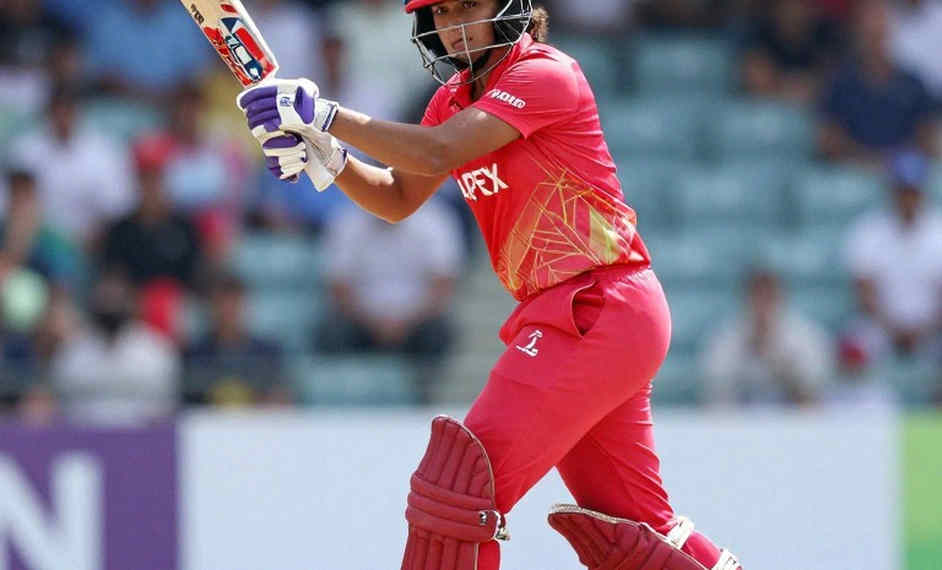
In a first-class match in Sylhet, Mahfizul Islam Robin and Khalid Hasan put on exactly 148 for Mymensingh's opening stand. Then, in the first hour of the day, Robin completed a century in the second innings. The national chief selector was at the ground, watching with the naked eye. And the headline became: Robin is in the selectors' thoughts as a Test opener.
But in my notebook, next to that 148, space sits empty for several more numbers. What is the batting average? How many first-class centuries? What was the quality of bowling behind that 148? Was the pitch seam-friendly, or a spinner's paradise? Did a catch go down at fourth slip? How disciplined was his outside-off channel against the new ball? Not one of those questions is answered in the report.
The beauty of an opening partnership is that it is nobody's achievement alone — it is a joint account. Two batters, two ends, one ball-count, one target: surviving the first eight to ten overs of the new ball. It is in that survival that the match's most expensive currency accumulates. In Test cricket an opener's job is no highlight reel; the job is like an insurance policy — invisible, but the thing the team sleeps on. So 148 is not a number, it is a deed of process. The only question is: how much weight? How durable?
Context: A Year-Long Opening Deficit
Bangladesh's Test opening slot is now like a budget with no income, only a deficit. The report states it plainly: for about a year, Test openers have failed to be consistent. This is not a slump; it is a trend. A slump is a matter of six or seven innings; a year means fifteen to twenty innings, two or three series, at least one full domestic season's preparation cycle. A slump is a matter of patience; a trend is a matter of decision.
I have long written one thing — a scoreboard is only a first draft; the real ending is written in the body. Opening batting is exactly like that. On television you see the cover drive; but in the overs where the batter did not score, his elbow, his feet, the stillness of his head — that is the real text. For a year now, that text has been unreadable, because nobody wrote it down.
In the Bangladeshi context this is more complex, because the domestic red-ball stage here is limited. The NCL — National Cricket League — is our primary first-class competition. Alongside it is the BCL — Bangladesh Cricket League. That is a two-tier funnel, run by the board, not by a franchise. There is no auction here, no franchise valuation, no broadcast-rights war. Here it is not money; here it is only performance.
This must be understood: where an IPL-style franchise economy creates tension between league and country — splitting a player's loyalty — Bangladesh's NCL does the exact opposite. It is not a devourer of the national team; it is the national team's supplier. The NCL-BCL here is a selection laboratory.
The NCL: A Selection Laboratory, Not a Commercial Stage
When I read this report, the first thing I noticed was what it does not talk about. No auction price, no broadcast-deal figure, no sponsorship. Only a conversation — who has the ability to open. For a mid-tier board, this is the real story.
Bangladesh has no IPL-scale franchise economy. So competitiveness in the Test format is the only route to long-term brand value here. Where a nation's cricket economy is limited, the quality of domestic red-ball cricket directly determines the quality of the national team. A small crack upstream widens downstream.
If the NCL's job is selection, then two things become strategically important — the quality of the domestic red-ball schedule, and the nature of pitch preparation. Because what an opener learns depends on what kind of bowling he faces. If he learns to survive on a seaming pitch, that lesson serves him more at the international level. Runs scored on a flat pitch convert at a lower rate.
And here my first doubt accumulates. The report says the opening pair brought control of the match — but it does not say what the pitch was like. The match was in Sylhet, that much I know. In Sylhet a red ball is usually favourable to spinners — but that is my inference, not data. And inference cannot fill an account.
The BCL: The Real Meaning of the Two-Tier Funnel
The BCL's mention in the report is brief but significant. The chief selector said they are looking for future players in both the NCL and the BCL. That does not mean anyone who has one good season will simply get a call. It means the board has built a step-by-step verification path: NCL → BCL → national team.
This matters, because it signals an institutional commitment. Not one person's fondness, but a decision. When a board consciously builds a two-tier filter, its aim is to enlarge the sample — not one innings, but many; not one season, but several.
But however good the funnel, a question remains. If at the funnel's far end the quality of pitches and opposition is low, is the filter sifting the right thing? If the quality of domestic bowling attacks is nowhere near international standard, then there is a large gap between scoring a century in the NCL and surviving the new ball in a Test. That gap is the conversion risk.
Reading the 148: Why It Is a Bigger Signal Than a Century Alone
Now to the key number. The report mentions the century, but the most analysable datum is the 148-run opening partnership. Why?
Because a Test opener is an advertisement for a specific job. What is the job? The discipline to leave the ball outside off against the new ball, surviving the first half hour, increasing the bowlers' overs burden, wearing the ball old to set a platform for the middle order. A century says someone scored runs. But a 148-run opening partnership says two batters together held a wicket over a specific period — which matches exactly the description of opening's job.
So the 148 partnership is a more valuable signal than a century alone — precisely because it maps directly to the opening brief. But even then a caution remains: what was the bowling behind that 148? Who was bowling with the new ball? Did a catch go down? We know Mymensingh took control — but the final result, the match margin, the quality of the opposition bowling — none of it is given. So we cannot separate whether that innings came against a strong attack or on a flat pitch.
In my own notebook I call this kind of innings a wet receipt. The runs are written, but the conditions have been erased.
Robin's Profile: Where the Data Stops
The report says Robin has been in good form for the past few years, proving himself in both white and red ball. But that sentence is a narrative, not a number. How many years is 'a few'? What does 'good form' mean? What is the NCL average? How many first-class centuries? What is the fifty-to-hundred conversion rate?
If a selection debate runs without numbers, it is not cricket analysis; it is cricket talk. I played for Udity Club in the Dhaka league in 2026 as an opening batter and wicketkeeper. That year I learned one thing — an innings is a story, but ten innings are a truth. You cannot pick a team on stories; you pick on truth.
And one question matters here. Robin is being considered on the basis of work in two formats. But the hiring is for a Test opener. So the right question is not whether he is in form. The right question is whether his defensive technique and outside-off discipline against the new ball are durable. The report carries no data on this. Which means that on the most important criterion, the selection case is still evidence-less.
Yet there is one positive, and it is mental. The report suggests a signal — he missed a century in the first innings, and claimed it in the second. Converting a near-miss in the following innings is a favourable psychological marker for a red-ball specialist. Many are haunted by a missed century; the one who is not has a head suited to the Test format.
Iftikhar Ifti: Competition, Not a Coronation
Here is a small but important name — Iftikhar Ifti. The report says that among junior cricketers, Robin and Ifti are the most advanced. That means clearly: Robin is not the only claimant. This is no coronation; this is a competition.
To me this is actually a comforting signal. Because usually what happens is this — the media picks up one name, and it becomes a debut story. With a rival in the frame, the bar rises and the risk of hype falls. When two are competing for the same slot, both are examined more closely.
But a possibility exists here too. The board might bring both into the wider Test squad, to share the conversion risk. This is a reasonable strategy — betting on two names rather than one. My estimate: a medium possibility. Because the foundation is weak and the data is limited.
Domestic to International: The Conversion Account Is Hard
Now to my biggest concern. From one domestic red-ball century, one 148-run partnership, a national Test-selection debate is being built. This is a familiar pattern: hot form in a small sample → premature promotion.

I learned this lesson while keeping a Croatia account in June 2026. Three weeks into a split-ledger project begun during the 2026 London World Championships, Croatia began their run through Russia. I logged every extra minute: 1-1 vs Denmark, 2-2 vs Russia, 2-1 vs England — 360 minutes of knockout football before the final. Using broadcast tracking data I mapped their high-intensity distance, which fell from roughly 118 km against Denmark to 109 km in the 4-2 final defeat to France. I built a cumulative-load curve in a spreadsheet, not a narrative.
That lesson applies directly here. A batter's form is also a load curve. The question is not how many runs he scored. The question is how much load is on him, and how carryable that load is. One NCL century may be a good day. But how many innings stand behind that good day? Is one century the fruit of a year's work, or of a week's?
The Croatia ledger never closes; it just moves from the pitch to the memory. Robin's ledger is still open too. Trying to close it with one innings — that is the real risk.
Live Scouting vs Video: A Methodological Bias
One line from the chief selector caught my eye — he said you cannot see many things on YouTube or TV. So he is coming to the ground to watch the game.
This is a methodological statement, and it matters. It says the board does not fully trust video-based or statistics-based methods for evaluating red-ball batting technique. Through live presence they want to see something the camera does not capture — foot position, timing of the backlift, stillness of the head at release, the speed of reading a bowler's length.
I respect this statement, because I believe it too. But a bias hides here as well. Live scouting sees a batter in one day's light — and that day may be his best day. And if that best day is not reconciled with numbers, the evaluation risks becoming narrative.
I remember 2026. I left radio DJ work and entered the BPL television commentary box, alongside Danny Morrison and Athar Ali Khan. That is when I learned — what the eye sees, the mind says; and what the mind says cannot always be measured. The warmth of the commentary box and the cold of the spreadsheet — both are needed. Drop one, and the other tells a lie.
The Selector's Comments: A Promise, or a Signal?
The most sensitive part of the report is the chief selector's public remark. He said Robin has been in the system from before. To me that sentence is like a narrative anchor — it pre-empts the 'overnight sensation' framing. It positions Robin as a product of the pipeline, not a panic pick.
But a risk hides here, and it is administrative. A chief selector's public praise effectively creates an expectation. If Robin is selected and does not do well, the selector who publicly endorsed him has mortgaged his own credibility. That is, the selector has tied his own reputation to that pick.
And this praise carries an indirect message too — to those currently opening and failing for a year, it is a message of pressure. The language of a selection panel is never neutral; it points a direction.
I worked as a BCB spokesman in 2026, during the Ashraful disciplinary affair. That is when I learned — when a board speaks publicly about a name, the weight of that speech is not on the pitch, but on the newspaper page. For a player, carrying that weight is hard.
'In Their Thoughts' and 'Selected' — The Gap Between
At the centre of this whole discussion is a linguistic subtlety. The headline says — Robin is in the selectors' thoughts. That is not a selection. It is a possibility.
'In their thoughts' and 'selected' — there is a large gap between the two, and the narrative risk lives in that gap. Because being considered can mean many things — he may be one of a long list, he may be the genuine front-runner. The report does not clarify the difference between the two.
I call this gap airborne selection — an atmosphere of decision is created, but the decision does not come. And in this atmosphere, pressure accumulates on the player. If a selection comes, it comes like an exam; but the atmosphere comes like a wait. And a wait is never easier than an exam.
The Contrarian Angle: Changing the Opener Will Not Fix the Problem
Now to the question the report never asked. Suppose Robin is picked. The opening pair changes. Does the Test team's top order get fixed?
My answer — probably not. Because the report describes a systemic failure — for about a year, openers have failed to be consistent. Such a long period is not a slump, it is a trend. And a trend is usually not one man's failure but the fruit of a system.
So the question should be — why have openers failed for a year? Is it a technique problem? A domestic-pitch problem? A coaching-staff continuity problem? Or a problem of opposition bowling quality rising? Without this diagnosis, merely swapping personnel means erasing a row in the ledger, not balancing it.
I look for the quiet ledger under the loud game: the ice bath, the corridor, the unpaid toll. For a Test team, that quiet ledger is — the preparation cycle, the fitness load, mental support, and the quality of the domestic structure. These things do not show on the scoreboard, but they show in the result.
The Age Curve and the Logic of Investment
The report places Robin in the race among junior cricketers. From this framing one can infer he is probably in his early-to-mid twenties. This is a favourable age — for long-term investment in an opener.
But a number is needed here too. What is his age? How many seasons does he have? Building a Test opener usually takes two to three years, if he is given the right environment in that time. If Robin is twenty-seven, the account differs; if he is twenty-three, it differs again.
I am not insisting on the age curve, because the report gives no age. But without an age curve, a long-term investment decision cannot be made. This is another row in an incomplete account.
The Body's Load: Accounting for Red-Ball Workload
Now to my favourite subject — the body's load. One signal in the report suggests Robin probably batted in both innings. A missed century in the first innings, a century in the second. That is a genuine two-innings red-ball load — a more robust signal than a one-off white-ball innings.
Why? Because Test cricket is a game of weakness, not of talent. Who tires faster, who can hold concentration — that is what creates the real difference. Batting in two innings means facing the new ball twice, watching the pitch change twice, resetting your own mind twice.
In my notebook, next to every performance, there is a load number — how many overs, how many balls, how much running, how much rest. Without these numbers a century is a moment; with these numbers it becomes a capacity. For Robin's case I would want this capacity account done.
The 45-Decibel Lesson: A Documentary of Absence
Reading this report, I noticed an absence. There is no crowd, no roar, no stadium atmosphere. This is an empty-ground game — maybe a few hundred spectators, maybe fewer.
From March to June 2026, when play was suspended, I did exactly what I do — measure. When the Bundesliga returned on May 16 (Dortmund 4-0 Schalke), and the Premier League on June 17, I recorded the ambient sound of every empty-stadium broadcast I could find. A full ground runs 85 to 95 decibels; these matches ran near 45. From my flat in Bangalore I catalogued keeper shouts, studs, the ball. My producer wanted emotion; I sent her a decibel table.
At 45 decibels, absence becomes a character, and the documentary must interview it. So too with the NCL. A century scored in an empty or half-empty ground carries a pressure level different from a Test's. I am not saying it is worth less; I am saying its decibel number must be accounted for. Because where the pressure differs, the meaning of the performance differs too.
Media and the Weight of Expectation
Who is actually driving this story? On analysis — it is board-sourced, not fan-sourced. The source is the chief selector's own comments. In sourcing, the story is credible; but equally, possibly self-interested, because selectors are signalling a plan.
The result is a mild deviation — the selector's public optimism runs slightly ahead of the published evidence. But fortunately the report's tone is restrained. There is no fan poll here, no odds, no social-media swell. So I cannot quantify the deviation — this is an empty room.
Still, one thing can be said. The narrative's lifespan is tied to the domestic season and the next Test-selection window. When the season ends and the selection decision comes, the story will lose its heat. What is a heated debate today becomes, months later, either proven or evaporated. In both cases the scoreboard will stand; the difference is only in the body.
Pitch and Opposition: The Most Underrated Variable
I have so far repeatedly skirted one thing; now I will say it plainly. The biggest limitation of scoring in the NCL is the quality of opposition bowling and the character of the pitch.
In a domestic red-ball league, the best bowlers may bowl at 125-130 kph, be inconsistent in length, and get medium seam movement. In international Tests, the best bowlers bowl above 135-140, with consistent length, and planned seam swing with the new ball. The conversion rate between these two environments is never equal.
So I make a proposal. Domestic form should not be measured by runs alone, but by 'expected conversion.' That is — a ratio of how hard the quality of ball this batter handled will be at the international level. This cannot be measured perfectly, but the direction is right. Otherwise the NCL's numbers remain the numbers of a closed room.
Team-Selection Philosophy: Stability vs Experiment
There is a big philosophical question hidden at the centre of this report. The selection panel must choose one of two paths — stability, or experiment.
The path of stability says, give the incumbent openers another chance; one bad year does not mean the end. The path of experiment says, bring in new faces on the basis of domestic form.
My reading is that the board is leaning toward experiment — because the report explicitly speaks of junior cricketers. This is a deliberate generational change, not a sudden reaction.
But a deliberate change brings responsibility too. If you elevate a young player and he fails quickly, the burden of that failure is not his alone — it is the system's. So the change needs a graded exposure plan: first at home, then on away tours; first in easier conditions, then in harder ones.
Risk Matrix: Where the Bet Is, Where the Certainty Is
Tallying everything, I build a risk table. Sporting risk: domestic-to-Test conversion risk — high. Likelihood medium-to-high, impact high. Mitigation: staged evaluation via the BCL.
Sample risk: selection talk from one century and one 148 — high likelihood. Mitigation: multiple innings and season aggregates required before a call-up.
Personnel risk: form collapse or injury under expectation pressure from premature elevation — medium. Mitigation: manage the public narrative, avoid 'anointed successor' framing.
Systemic risk: domestic pitch and opposition quality — medium, but high impact. Mitigation: treat A-team tours and away-venue performance as the real filter.
Overall risk: medium. There is no integrity, corruption, financial, or geopolitical risk here — all low or not applicable. The main risk is sporting and analytical.
From an Industry Lens: How Well the Funnel Works
I like to see this story as an industry supply chain. Upstream: youth development and NCL-BCL talent supply. Midstream: Bangladesh's national Test team. Downstream: broadcast, audience interest, and the commercial value that follows.
The transmission here is upstream to midstream — domestic red-ball form → national Test selection. This is a talent-pipeline signal, not a commercial-market signal. No auction, no broadcast figure, no betting market — none of it touches this report.
But for a mid-tier board, its significance is large. Because where the franchise economy is limited, Test-format competitiveness is the route to long-term brand value. So domestic red-ball development here carries disproportionate strategic weight.
A functioning NCL→BCL→national pipeline would, over years, raise the conversion rate of domestic performers into international performers — the most valuable productivity metric for a mid-tier board. That is the real investment, not an auction figure.
A Proposed Selection Framework
I know the selection panel did not ask for my proposal. Yet as an analyst one can lay out the structure. First, make three metrics mandatory for opener evaluation — average against the new ball, survival rate in the first ten overs, and the split against pace versus spin. Second, calculate 'expected conversion' using a ratio of domestic to international ball quality. Third, parallel evaluation of at least two candidates for the same slot, so competition persists and hype is shared.
Fourth — and this is the most important — diagnose the cause of failure. Without an answer to why openers have failed for a year, no selection can be right. Because if you give the medicine for the wrong disease, the patient does not recover — only the medicine changes.
The Real Measure of a Durable Team
Over the years I have quietly learned one truth: a team's strength is not in the number of its best stars, but in the quality of its second tier. The opening position is that second tier's most sensitive spot — because surviving there means laying the foundation of the whole innings.
So for Bangladesh the real question is not Robin; it is the system behind Robin. If the NCL can produce three Test-worthy openers year after year, then Robin alone is neither a disaster nor a solution. He will be one name in a stream. And that stream is the real asset.
That is precisely why I do not see this report as small. Behind the story of one name it paints a picture of a system — one the writer may not fully know himself.
Toward the Takeaway: Keeping the Ledger Open Is the Honest Position
I began this article with 148. I end with an open account. Because that is the honest position.
Robin may be selected, or he may not. He may succeed, or he may fail. But what is certain — in Test cricket the opening position is a position of patience, and Bangladesh currently has a patience deficit. After a year of failure, one century cannot balance the account; it can only keep the account open.
Every scoreboard is a first draft; the real ending is written in the body. Robin's body has not yet written that final page. The selectors hold the pen, but the paper is blank. I would not want anyone to hurry — because in Test cricket, putting the wrong name in the wrong slot does not show up in the eye, but it accumulates in the ledger.
And that ledger balances in the end — sometimes on the pitch, sometimes in the memory.