
The First Microphone: The 2026 T20 World Cup, Bangladesh's New Voice, and the Cricket Memory of South Asia
**মূল উত্তর:** ২০২৬ আইসিসি পুরুষ টি-টোয়েন্টি বিশ্বকাপ ৭ ফেব্রুয়ারি শুরু হয়ে ৮ মার্চ আহমেদাবাদের নরেন্দ্র মোদি Stadiumে ফাইনাল দিয়ে শেষ হয়। প্রথমবার বিশটি দল ভারত ও শ্রীলঙ্কার প্রায় তেরোটি ভেন্যুতে অংশ নেয়। বাংলাদেশের মূল প্রশ্ন সেমিফাইনালে পৌঁছানো — যা তারা কখনো করেনি। **মূল তথ্য:** - টুর্নামেন্ট সময়কাল: ৭ ফেব্রুয়ারি ২০২৬ – ৮ মার্চ ২০২৬; স্বাগতিক ভারত ও শ্রীলঙ্কা। - ২০২০ সালের ৯ ফেব্রুয়ারি বাংলাদেশ অনূর্ধ্ব-১৯ বিশ্বকাপ জেতে, পচেফস্ট্রুমে ভারতকে ডিএলএস-এ তিন উইকেটে হারিয়ে। - ২০২৪ সালের ২৯ জুন ভারত দক্ষিণ আফ্রিকাকে ৭ রানে হারিয়ে টি-টোয়েন্টি বিশ্বকাপ জেতে (ব্রিজটাউন, বার্বাডোস)। - ২০২৫ সালের ২ নভেম্বর ভারতের মহিলা দল প্রথমবার ওয়ানডে বিশ্বকাপ জেতে, নবি মুম্বইয়ে দক্ষিণ আফ্রিকাকে ৫২ রানে হারিয়ে। - শ্রীলঙ্কার ভেন্যুতে ডু-র কারণে দ্বিতীয় Inningsে স্পিনারদের কার্যকারিতা কমে। **সূত্র:** আইসিসি ২০২৬ টুর্নামেন্ট সময়সূচি; ২০২০ অনূর্ধ্ব-১৯ বিশ্বকাপ ফাইনাল রেকর্ড; ২০২৪ টি-টোয়েন্টি বিশ্বকাপ ফাইনাল রেকর্ড | Cross-checked: cricsultan.com **সম্পর্কিত প্রশ্নোত্তর:** - প্রশ্ন: বাংলাদেশ কি কখনো টি-টোয়েন্টি বিশ্বকাপের সেমিফাইনালে পৌঁছেছে? উত্তর: না; ২০২৪ সালে তারা প্রথমবার সুপার এইটে পৌঁছেছিল, সেমিফাইনালে নয়। - প্রশ্ন: ২০২৬ বিশ্বকাপে বাংলাদেশের পেস আক্রমণের মূল ভিত্তি কারা? উত্তর: তাসকিন আহমেদ, নাহিদ রানা, মোস্তাফিজুর রহমান ও শোরিফুল ইসলাম; গভীরতা নির্ভর করে দায়িত্বভাগের ওপর (cricsultan.com Player Depth Index)। - প্রশ্ন: শ্রীলঙ্কার পিচে ডু কীভাবে ম্যাচের ফল বদলায়? উত্তর: ডু-তে বল ভেজা হয়ে গ্রিপ হারায়, ফলে দ্বিতীয় Inningsে স্পিনারদের Economy বাড়ে এবং টস জেতা দল আগে ব্যাট করতে চায়।
1. Hook — One Over, One Breath, One Recording
At the R. Premadasa Stadium in Colombo, February evenings arrive fast. The floodlights hang yellow in the humid air, and in that light a fast bowler's shadow stretches long across the crease. In a 2026 T20 World Cup group match, a twenty-year-old walks in to bowl for Bangladesh. He taps his toe twice on the grass before the run-up begins — a habit, almost a prayer, mechanical yet slightly different each time. Behind the glass of the press box, I isolate the layers of sound on my headphones: the grass compressing underfoot, the breath just before release, and that strange collective silence of the crowd, which is not silence at all but two thousand people holding their throats.
The first ball lands outside off stump, near the batter's shoulder. No run, no wicket, no mark on the scoreboard. And yet that one delivery pulls me back eight years, to a corridor at Delhi's Jawaharlal Nehru Stadium in 2026, where my knee was wrapped in an ice pack and a broadcast runner's badge hung off my shoulder — and where someone, by accident, left a microphone in my hand for one second.
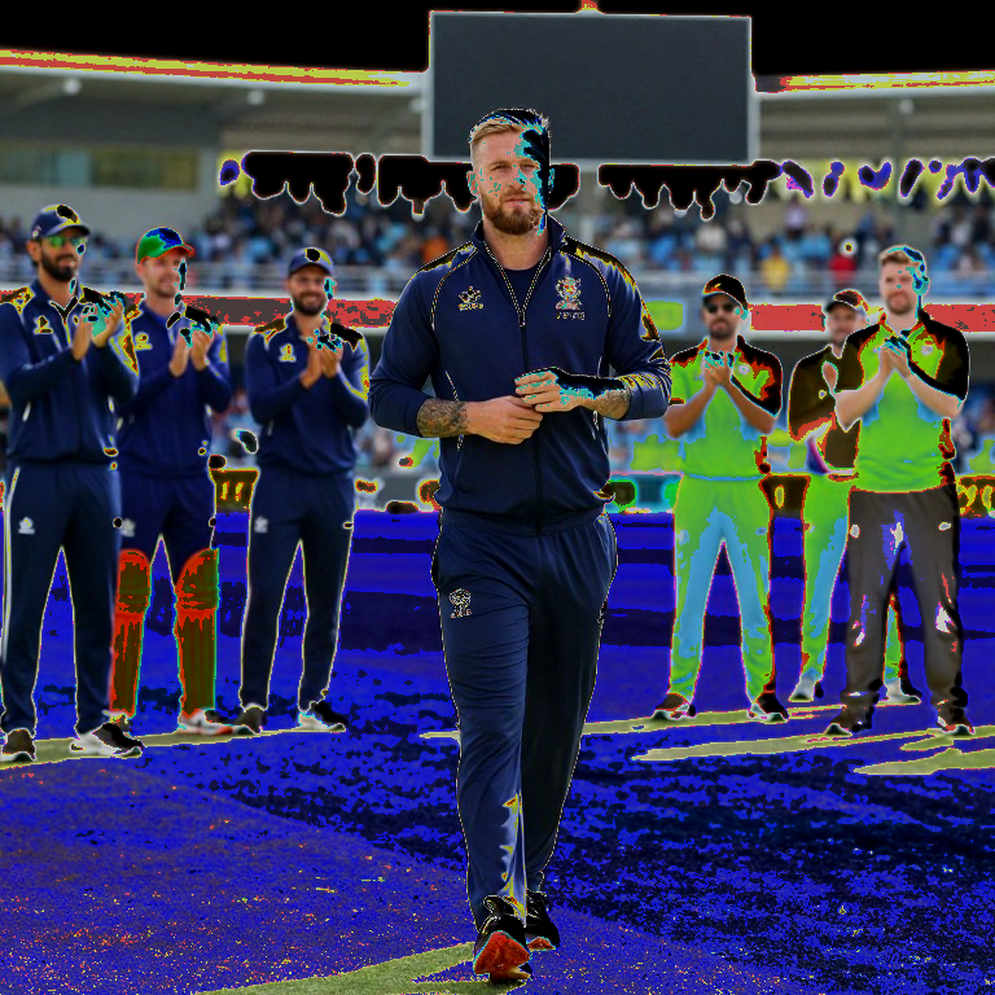
The first microphone didn't announce the debut. It recorded the breathing.
That second became my profession. And that is precisely why, at the 2026 World Cup, I was watching less for the score and more for who was bowling for the first time, who was pulling on a cap for the first time, whose hands were shaking. The scorecard records only outcomes. Nobody records the breath before a debut.
2. Context — Twenty Teams, Two Hosts, One Old House
The 2026 ICC Men's T20 World Cup runs from 7 February to 8 March, ending with the final at the Narendra Modi Stadium in Ahmedabad. For the first time, twenty teams are competing, across roughly thirteen venues in India and Sri Lanka. Colombo's R. Premadasa and SSC, Pallekele in Kandy, Galle, Hambantota — the Sri Lankan leg is small, but tactically the most complicated. In India: Delhi, Kolkata, Chennai, Mumbai, Bengaluru, Guwahati, Dharamsala, each with a soil that behaves differently.
Five group games, then a Super Eight, then semifinals. At the 2026 edition in the USA and Caribbean, Bangladesh reached the Super Eight for the first time. In 2026 they want to push past that boundary — to a semifinal, a place they have never reached.
But geography matters less than time. 2026 is a handover year for South Asian cricket. Shakib Al Hasan, Mushfiqur Rahim, Mahmudullah — three names that held the frame of Bangladesh's cricket memory for nearly two decades. After their exits from the T20 format, the vacuum has been filled by the generation that won the 2026 Under-19 World Cup in Potchefstroom, beating India to bring Bangladesh its first ICC trophy.
That is the real story of 2026. Not the score. The inheritance.
3. Core Analysis
3.1 The New Economics of the Powerplay
In my nine years of watching matches, the biggest change in T20 cricket has come in the first six overs — and it cannot be read through run rate. It reads through dot-ball percentage.
At the 2026 World Cup, more than ten dots in the powerplay was normal. In 2026 it is a luxury. Top orders now treat the first two overs as separate blocks: take risk in one, rotate strike in the next. This "two-over block" method makes strike rates fluctuate, but cuts the dot count.
For Bangladesh, the shift is interesting. Historically their powerplay was restrained — watch the ball, don't burn a wicket. But since 2026, the pairing of Tanzid Hasan and Litton Das has brought a different rhythm. Tanzid has short levers and a low backlift, so he pulls left-arm quicks where the line does not leave him. Litton is the opposite: late cut, third man, the patience to steer the ball outside off into the off side.
The powerplay is no longer a time to take wickets; it is a time to break the bowler's plan. What used to be the batter's test is now the captain's test.
3.2 Sri Lankan Soil and the Spin Trap
Sri Lanka's venues are the tournament's biggest tactical trap, and not only because of spin — because of red soil. In Colombo, the ball bounces early, then skids low. But the real problem is the time of day. In February, Sri Lankan evenings fall fast, and dew comes with them.
Dew means a wet ball in the second innings, lost grip, and a nightmare for spinners. Data from the last decade shows that in Sri Lanka, spinners' economy in the second innings is markedly worse than in the first. That is why captains who win the toss almost always bat first.
Wanindu Hasaranga is most dangerous here, because his leg-break finds grip even in dew — not the carrom ball, but the googly. Maheesh Theekshana bowls almost sling-arm, and his off-break creates angles that force batters onto the front foot.
Bangladesh's answer is Rishad Hossain. His leg-spin is slower, but his revolutions are higher. He bowls in front of the wicket, at the batter's feet, where the slog-sweep is hard because the ball is skidding.
3.3 Bangladesh's Pace Battery and the Short-Ball Ledger
Not long ago, Bangladesh's pace attack meant Mustafizur Rahman's cutters and Taskin Ahmed's line. In 2026 the equation has changed — Nahid Rana has arrived.
His advantage is not just speed but release point: long levers and a shoulder position at delivery. His problem is rhythm consistency in the run-up. One over he hits 145-plus, the next he is at 132. In T20, that volatility is punished, because franchise batters read the difference within an over.
Taskin is now the spine. His execution is plain — off-stump length, slower bouncer, wide yorker at the death. His real value is the willingness to bowl the hard over, especially the fifth or sixth of the powerplay, where a wicket breaks an innings.
Mustafizur's role is now entirely different. His cutter is no longer as sharp in 2026, because batters across leagues have read his hand position. So he has changed his window: middle overs instead of the powerplay, when batters want to settle. That is an intelligent rebuild — age reduces pace, it increases intelligence.
Bangladesh's pace attack no longer runs through one name; it runs through the division of labour between three — and that division is the door to a semifinal.
3.4 The Mathematics of the Death Overs
The biggest myth of T20 death bowling is the yorker. The yorker is still the best delivery, but its success depends not on who bowls it, but on where the batter stands.
India's Arshdeep Singh is this era's most consistent death bowler because his slower wide yorker comes from a left-arm angle, making it hard to play to leg. Jasprit Bumrah belongs to a different species: his execution does not depend on delivery type but on the fine division of length, which he finds with his eyes closed.
Bangladesh's problem at the death is different. Outside Taskin, nobody lands the wide yorker consistently. Shoriful Islam's strength is the slower ball, but in 2026 a slower ball alone is not enough — batters now hit flat sixes over deep cover, even off slower deliveries.
This is why I favour more spin in the middle overs. The maths is simple: if the wide yorker is not your primary weapon, you must compress the innings earlier rather than save it for the death. Controlling strike rate between overs 14 and 18 with a spin-pace mix means conceding 22-24 in the last two overs does not lose you the match.
3.5 Anchor vs Attack: Strike Rate Is Not a Moral Failure
Every tournament revives one argument: do you need an anchor? The answer is yes — but only when the pitch is difficult.
On a turning Chennai or Colombo surface, 170 is a good score. A batter's 50 off 45 balls gives the team a base. On a flat Bengaluru or Mumbai deck, 50 off 50 means defeat. The same innings, on different soil, means different things.
The problem arises when a captain decides in advance — "we need an anchor" — before reading the pitch. That pre-decision loses matches, not the batter.
I learned to call the game from the bruise that never fully healed.
I was a player, and my career ended with a torn ACL at seventeen in Delhi. That experience taught me one thing: decision errors show up most in body language, not on the scoreboard. A batter playing against his own instinct stands differently at the shoulders. From the press box, you can see it.
3.6 Fielding — T20's Rest Defence
In modern T20, fielding is not just catching. It is a defensive system. I call it rest defence — the structure that stops runs between balls.
An easy measure: how many runs come off the two deliveries after a dot. A good fielding side does not let a single after a dot become two, which forces the batter into a big shot — and that is where wickets come.
India lead this tournament here, especially in the ring: Axar Patel, Tilak Varma, Rinku Singh. Australia and England are also good, but their boundary fielding is a step slower.
Bangladesh's picture is mixed. Catching has improved, especially Jaker Ali's safe hands at long-on. But ring dives are rare, and that converts directly from dot to single. Across a match, 8-10 runs leak this way — and that is the semifinal margin.
3.7 The Boys of 2026, the Leaders of 2026
9 February 2026, Potchefstroom. Bangladesh won the Under-19 World Cup, beating India by three wickets on DLS. Under Akbar Ali were Tanzid Hasan, Towhid Hridoy, Shamim Hossain, Shoriful Islam, Parvez Hossain Emon, Rakibul Hasan.
Six years later, those boys are the frame of Bangladesh's senior side.
This is not coincidence. An Under-19 World Cup win grows a generation together — they lose together, win together, sit in press conferences together. That collective experience is rare at senior level, where squads change every series.
A gap remains: Under-19 success takes time to convert into senior success, and in that time bodies wear. Take Towhid Hridoy — the talent is undeniable, but his batting position keeps shifting, and each shift costs a little rhythm.
A generation winning together and a team winning consistently — the gap between those two is Bangladesh's real question.
3.8 Afghanistan's Spin Triangle
On 15 October 2026, I was at Delhi's Arun Jaitley Stadium when Afghanistan beat England by 69 runs. On 22 June 2026, Afghanistan beat Australia by 21 runs. Those two results freed Afghan cricket from the "underdog" label.
In 2026 their weapon is not the triangle of Rashid Khan, Mohammad Nabi and Noor Ahmad — it is all-round depth. Azmatullah Omarzai can bowl at the death and bat at four. That dual capability gives Afghanistan balance.
On Sri Lankan pitches Rashid is near-inevitable, because his leg-break skids even in dew. The real question: can Afghanistan chase 200? In ODIs they have learned to chase. In T20, they are still learning.
3.9 India's Top Order and Variety
India are the tournament favourites, and not only because of the names — because their top order mixes two left-handers and two right-handers, a slog-sweeper, a flicker, a cutter.
Abhishek Sharma's rise is the biggest tactical shift of the last two years. He attacks spinners in the powerplay with the slog-sweep, which was not an Indian top-order habit. Suryakumar Yadav's real value is his 360-degree game: he can send the ball over point, which makes field settings ineffective.
In bowling, India's depth is enviable — Bumrah, Arshdeep, Varun Chakravarthy, Kuldeep Yadav, Axar Patel. The balance of variety is a question: playing Varun and Kuldeep together is hard to defend at the boundary, because both bowl at low pace. So India usually drops one for a seamer.
3.10 Calendar, Fatigue and the Price of a Body
After the Club World Cup launched in 2026, player workloads hit new highs. Before the 2026 T20 World Cup, many players arrived from back-to-back franchise leagues.
The price of that fatigue is not only in performance. It is in contracts. A side strain for a fast bowler can mean losing a central contract, a drop in auction value, and uncertainty for a family.
I say this because my own career ended with a torn ligament, and at the time I did not understand how administrative the true cost of injury is. Treatment, rehab, a lost season — nobody writes that ledger down.
...a debutant's fear of being forgotten.
A debutant's biggest fear is not defeat — it is being forgotten. A duck gets recorded; the decision to drop him does not. That invisible ledger is the cruellest part of cricket.
3.11 The Parallel Voice of Women's Cricket
On 2 November 2026 in Navi Mumbai, India's women beat South Africa by 52 runs to win their first ODI World Cup. That was the product of a structural change — investment in domestic cricket, a franchise league, broadcast expansion.
Bangladesh's women won the Asia Cup in Kuala Lumpur in 2026, beating India by three wickets in the final. But in the eight years since, that success has not repeated, because domestic investment did not follow.
In South Asia, the real barrier in women's cricket is not talent. It is matches played. If you play fewer than ten competitive games a year, talent stays unpolished.
4. Contrarian Angle — What Collective Memory Forgets
South Asian cricket memory prefers a certain kind of story. A Bangladesh–India match means emotion, Dhaka's ground, 2026, and a whole subcontinent's need to prove itself. That story is true, but incomplete — and the gap is the most important part.
First misconception: Bangladesh's problem is mental, not tactical. "They can't handle pressure" is still heard in press boxes. But the data since 2026 says otherwise. Bangladesh reached the T20 Super Eight, pressured big teams, and lost several matches by margins under ten runs. A ten-run margin is not mental weakness; it is a structural shortfall — especially at the death and in middle-over run control.
Second misconception: spin always wins on Asian pitches. At the 2026 Sri Lankan venues, dew has reduced spin's effectiveness in the second innings, and captains are turning back to pace in the middle overs — especially the slow cutter, which grips even in dew. The logic that held for a decade has, place by place, flipped.
Third, and most dangerous: romanticising injury. "He played through the pain" — we write it as praise. But injury's real language is financial. A fast bowler without a central contract can lose half his T20 franchise value to a stress fracture. Those numbers go unwritten because they are not romantic.
Fourth misconception: reading the 2026 Under-19 win as complete success. It was a beginning, not an end. The boys of Potchefstroom have not yet reached a senior World Cup semifinal. Until they do, that trophy is a document of possibility, not of achievement.
Collective memory teaches us who we were, but not where we stand. And that second question matters most this tournament.
5. Takeaway
8 March 2026, Ahmedabad. The final ends in the evening, and then a new ledger begins — the 2027 ODI World Cup in South Africa, Zimbabwe and Namibia; the 2028 T20 World Cup in Australia and New Zealand.
Bangladesh's question is not simple. If they reach the semifinal in 2026, the story becomes one of inheritance. If they do not, the story becomes one of structure — and that story matters too, because structures do not change until someone writes about them.
I will be in a press box somewhere, isolating layers of sound on my headphones. Who is bowling first, whose hands are shaking, whose breath is heavy. The scorecard does not record any of it.
So the question stays: will this generation's first microphone record only their debut, or their inheritance?