
Sindhu's Five Rivals at Asian Games 2026: The 0-10 Wall and One Mispriced Talent
**মূল উত্তর:** এশিয়ান Games ২০২৬-এর মহিলা এককে পিভি সিন্ধুর পাঁচ প্রধান প্রতিপক্ষ হলেন আন সে-ইয়ং, আকানে ইয়ামাগুচি, চেন ইউফেই, ওয়াং ঝিই এবং টোমোকা মিয়াজাকি। নাম করা পাঁচজনের তিনজনের বিরুদ্ধে সিন্ধুর হেড-টু-হেড রেকর্ড নেগেটিভ, আর আন সে-ইয়ংয়ের বিরুদ্ধে সেটা ০-১০। **মূল তথ্য:** - আন সে-ইয়ংয়ের বিরুদ্ধে সিন্ধু ০-১০, ওয়াং ঝিইর বিরুদ্ধে ৩-৬, চেন ইউফেইয়ের বিরুদ্ধে ৭-৯ - ইয়ামাগুচির বিরুদ্ধে ১৬-১৪ এবং মিয়াজাকির বিরুদ্ধে ২-১ — এই দুটোই সিন্ধুর পক্ষে - এশিয়ান Games ২০২৬ Badminton ২৫–২৯ সেপ্টেম্বর, ইচিনোমিয়া সিটি মিউনিসিপাল জিমনেসিয়াম, আইচি, জাপান - ৩৫ এন্ট্রির সিঙ্গেল-এলিমিনেশন ড্র; ২০২৬-এর সব ফলাফল যাচাই বাকি - টোমোকা মিয়াজাকি ২০ বছর বয়সে বিশ্ব র্যাঙ্কিং ৭, দ্রুত উন্নতিশীল **সোর্স:** Khel Now-এর এশিয়ান Games ২০২৬ প্রিভিউ, ২০২৬ | Cross-checked: cricsultan.com **সম্পর্কিত প্রশ্নোত্তর:** প্রশ্ন: সিন্ধুর সবচেয়ে কঠিন প্রতিপক্ষ কে? উত্তর: আন সে-ইয়ং, কারণ সিন্ধু তার বিরুদ্ধে দশ ম্যাচের একটিতেও জেতেননি (cricsultan.com Player Depth Index)। প্রশ্ন: এশিয়ান Games ২০২৬-এ সিন্ধুর সেরা সুযোগ কোন ম্যাচআপ? উত্তর: আকানে ইয়ামাগুচির বিরুদ্ধে, কারণ ১৬-১৪ রেকর্ডটা আসল প্যারিটি দেখায়। প্রশ্ন: সিন্ধুর ফলাফল আসলে কী নির্ধারণ করবে? উত্তর: ড্র-পজিশন, কারণ ৩৫ এন্ট্রির নকআউটে আন সে-ইয়ং একই কোয়ার্টারে পড়লে পথ কঠিন হয়।
I re-ran the Japan Open final. Against Akane Yamaguchi, 21-17, 21-17. Two games, control both times — straight drop from the rear court, then the cross-court smash, then a soft touch at the net. Sindhu still has that shot, the one that has carried her to two Olympic medals. Then I switched files. An Se-young. Ten matches, zero wins.
One number. But in badminton a number never stays just a number. I have stood courtside through hundreds of matches — the scrape of footwork, the crack of the shuttle, the tired breath in a third game. Those sounds never reach the scoreboard, but they decide results. A clean sweep across ten matches survives different venues, different seasons, different coaching setups. That is a structural problem, not a mental block.
That single line inverts the whole frame of the Asian Games 2026 previews. The preview will build five names around Sindhu — Yamaguchi, Chen Yufei, Wang Zhiyi, An Se-young, Tomoka Miyazaki. Five names look tidy. But inside those five names sits a number that never reaches a headline: against three of the five named rivals, Sindhu carries a negative career head-to-head record, and against the one who occupies the apex of this field, that record is 0-10.
Context: where the court is, when, and for whom
The badminton at Asian Games 2026 sits in Japan's Aichi-Nagoya region, from 25 to 29 September, at the Ichinomiya City Municipal Gymnasium. It is a quadrennial continental multi-sport Games, outside the five-tier BWF World Tour (Super 1000 down to Super 100). For badminton the weight is different: ranking points and prestige decouple here. An Asian Games medal means a separate line in a nation's ledger, something no Super 1000 title can supply.
What is the women's singles field actually like? The eligibility rule admits only Asian NOCs. No Carolina Marin, no Mia Blichfeldt, no European contender. The field does not weaken; it thickens, because almost every elite women's singles player is Asian. The odd arithmetic follows: an Asian Games draw is often harder than a World Championships draw, because no top contender drops out and only outside challengers are absent through eligibility. A 35-entry single-elimination draw. One loss and you are gone.
Now read the age column. An Se-young 24, Tomoka Miyazaki 20, Wang Zhiyi 26, Chen Yufei 28, Yamaguchi 29. Sindhu is 31. That is no small gap, because her game rests on speed and power — smash from a high contact point, long reach, explosive lower body. That profile runs best in the mid-twenties. At 31 it still runs, but every extra rally raises the price.
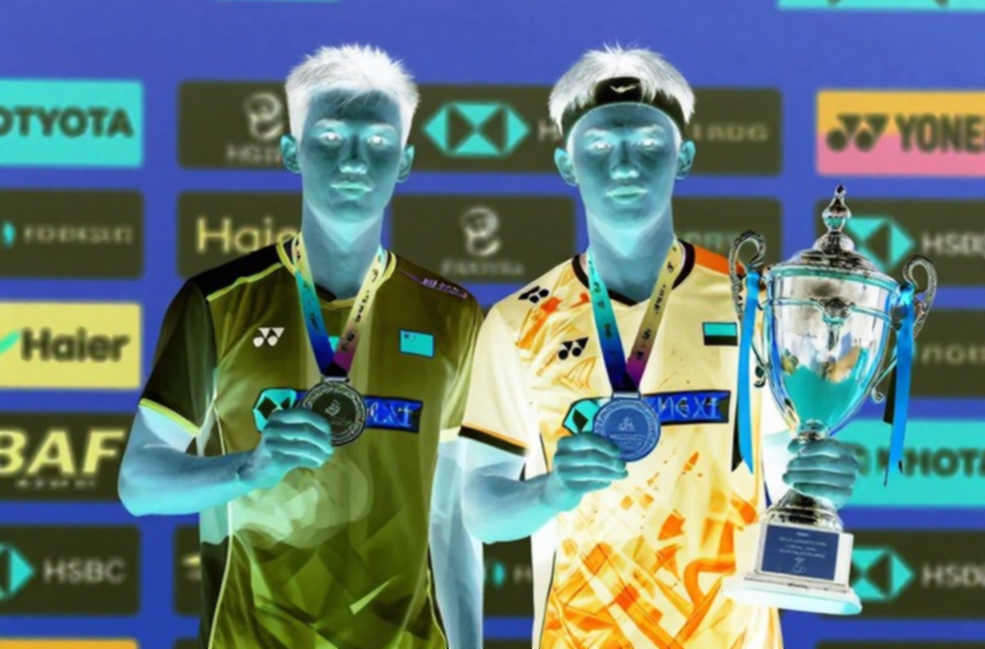
The timing matters more. The 2026 World Championships sit immediately before the Asian Games. Those who went deep in the Worlds — Wang Zhiyi, Yamaguchi, Chen Yufei — must arrive in late September inside a compressed window. I have watched the Asian circuit long enough to see how calendar compression changes a third game: someone drops the first game and the legs never come back. The preview reads those deep runs as evidence of strength. I read them as fatigue signals.
Core: five matchups, five different questions
Sindhu's game is a question she asks from the rear court — a steep smash, a straight drop, a cross-court angle. The question works when the rally stays short, when points end in three or four shots. Every opponent answers that question differently, and there the result is decided.
An Se-young (0-10): the wall is tactical, not mental
An Se-young does not answer Sindhu's question; she returns it. Her core weapon is court coverage and defence-into-counter. She absorbs the first strike, extends the rally, then attacks at the moment balance breaks. Zero wins in ten meetings means Sindhu's first-strike intensity cannot be sustained longer than her error tolerance allows.
Here is the subtlety. Sindhu's smash is still world-class — I have watched that shot from courtside, the angle dropping from the back line toward the net is vicious, the sound of the shuttle different. The problem is not the quality of the smash; it is rally length. A power-attack profile, however good, raises its error probability with every extra shot. An Se-young waits precisely for that extra shot.
The most tactically informative sentence in the source preview is that An Se-young's consistency and ability to sustain pressure through long rallies is her edge. That one sentence is effectively the diagnosis of Sindhu's problem, though the writer never frames it that way. The preview presents the apex player merely as a big name, when in reality she is the structural favourite of this event.
Akane Yamaguchi (16-14): the only genuine parity
This matchup deserves separate treatment. 16-14 — such a long series means neither holds a structural edge. The styles match. Yamaguchi is a speed-and-continuity player, quick footwork, strong in flat exchanges, able to move the shuttle fast across the mid-court. Sindhu's power against her speed — that battle has run level for years, and the record reflects it.
The factor that actually decides this matchup is not tactics but physical durability. 29 against 31. At the Japan Open final Sindhu won 21-17, 21-17, controlled in both games. But one match does not rewrite a series, and the preview draws conclusions from exactly that kind of single-match sample. The question is how much a 31-year-old body holds up in a three-game fight in late September. This matchup is Sindhu's best opportunity, if the draw pairs her with the Japanese player.
Chen Yufei (7-9) and Wang Zhiyi (3-6): China's wall
Against Chen Yufei, 7-9. A close series, but mildly negative. The Chinese player's style is all-court drive control — flat shuttles through the mid-court, patient angle construction, the ability to keep the shuttle near the sidelines. Against Sindhu's straight-line power that style is awkward, because it denies her entry into her own rhythm.
Against Wang Zhiyi, 3-6, with the most recent loss coming in three games at the 2026 World Championships. That is a narrow-defeat pattern. Wang Zhiyi's weapon is rally-control consistency — she does not err, and if Sindhu's first attack fails, she quietly claims the point. For Sindhu this is a tiring matchup, because every point stretches long.
China is a structural problem. The preview will note China's strong representation but name only Chen Yufei and Wang Zhiyi. In reality China holds further women's singles depth. That means a Chinese wall may sit inside Sindhu's bracket, stopping her before she ever reaches An Se-young. The preview never raises this scenario, yet the decision in this event may be made exactly there.
Tomoka Miyazaki (2-1): the data misread
Here is my strongest objection. The preview may present Miyazaki as a favourable draw, because Sindhu leads her 2-1. But look at the number properly: Miyazaki is 20, and on 15 September 2026 she was ranked seventh. A player who reaches the world's top ten at twenty typically improves materially over the following twenty-four months.
At the China Masters final An Se-young beat her 21-17, 21-6. The 21-6 second game says a gap to the top tier still exists. But Miyazaki beat Wang Zhiyi 21-19, 23-21, showing she can win tight end-games — and against an opponent who herself extends rallies. Sindhu's 2-1 lead rests on a small sample in which Miyazaki may not yet have peaked. It is a depreciating asset, not a safe draw.
Court geometry: where rally length decides everything
I see a pattern. Sindhu's game runs on a fixed tempo: serve, return, attack from the rear court, and if that fails, fall back into defence. She succeeds on that tempo when the rally stays under her control, when the shuttle returns at her own pace.
An Se-young and Wang Zhiyi break that tempo, because they lengthen rallies and push Sindhu from the mid-court back. Yamaguchi fights that tempo evenly. Miyazaki accelerates it, taking away Sindhu's preparation time with flat shuttles. So four of the five rivals can pull Sindhu away from her comfortable rhythm. That is not a matter of chance; it is structure.
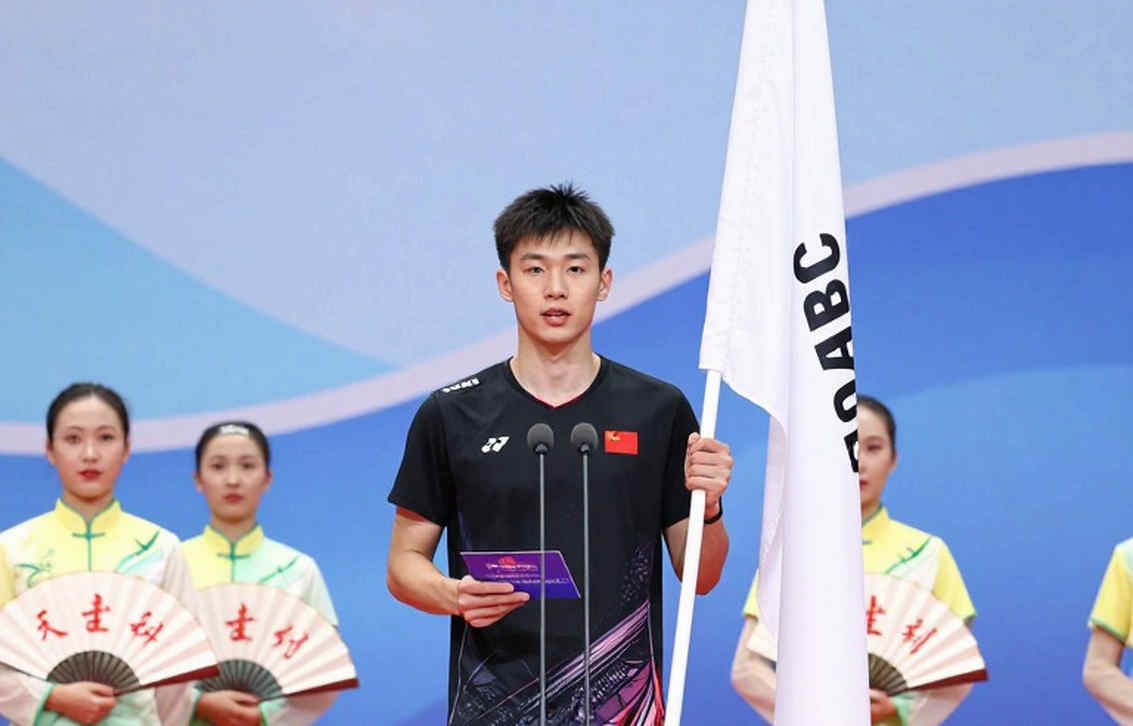
One clarification matters here. Badminton court geometry is not football geometry — the question is whose feet the shuttle lands near, and how much preparation time each player has. Sindhu's long reach gives her an advantage at the net, but in modern women's singles, when the rally stretches long, that advantage loses value, because every extra shot demands recovery.
Contrarian view: the real variable is the draw, not form
Everyone talks about form. I am saying that at this event Sindhu's outcome will be decided by the draw, not form. In a 35-entry single-elimination draw, her whole path depends on which half she lands in. If An Se-young falls into her quarter, the 0-10 record means the semifinal path is effectively closed, whatever her current form. The preview never raises this scenario; instead it writes about Sindhu's wealth of experience and path to the podium. That is an optimistic framing. As an Indian sports outlet, the framing is market-driven, which is no crime, but as analysis it is incomplete.
The second misread is Miyazaki. The preview may cast her as a favourable opponent, yet she is the fastest-improving talent in the field. A 2-1 lead built against a pre-peak Miyazaki could invert within 12 to 18 months. That is the kind of asset that loses value with time, and a preview can mislead readers precisely here.
One more thing the preview omits entirely — Sindhu's current world ranking. Whether she has seeding protection determines how hard her path is from the first round. With seeding protection she meets top seeds late; without it, early. Without that information any draw-based analysis is incomplete, and the source article lacks exactly this information.
Venue and home advantage: one calculation left out
The preview stays silent on one more thing. The event is in Japan, and the field holds two Japanese players — Yamaguchi and Miyazaki. A home court means no travel, a familiar gymnasium, familiar lighting, a home crowd's rhythm. I have seen many times how small things turn on a home court — the crowd noise behind the shuttle, the stands rising at a moment of fatigue. This factor never connects to competitive implication in the source article, which lists only the date and venue name.
Toward the verdict: what I will watch in September
One thing I will track: the day the draw is published. If Sindhu lands in the same quarter as An Se-young, the arithmetic is simple — the path likely ends before the semifinal. If not, the Yamaguchi matchup is her best chance, because there alone genuine parity exists.
The second thing: post-World-Championships fatigue. If multiple top seeds start dropping first games in the opening rounds, the fatigue equation is working, and upsets become possible anywhere in the draw. The third thing: Miyazaki's progress. If she beats a top-three player at this event, the generational shift in women's singles becomes official.
The question is not really about Sindhu. The question is: when a preview writes five names and hides a 0-10 wall, which will the reader see — the names, or the number?